Key takeaways
- Good partners ask as many questions as you do. They want to understand your goal before quoting.
- Insist on code ownership, clear scope, regular demos and named people who will do the work.
- Be cautious of fixed promises made after one call, unusually low prices and vague answers about process.
- Ask to speak to past clients, and look at working products, not only slides.
- Start small with a paid discovery or pilot before committing to a large project.
What you are really choosing
You are choosing people, a way of working and a long-term relationship, not just a price. The wrong partner costs far more than the quote: delays, rework, software nobody else can maintain. These questions help you tell the difference early.
Ownership and contract
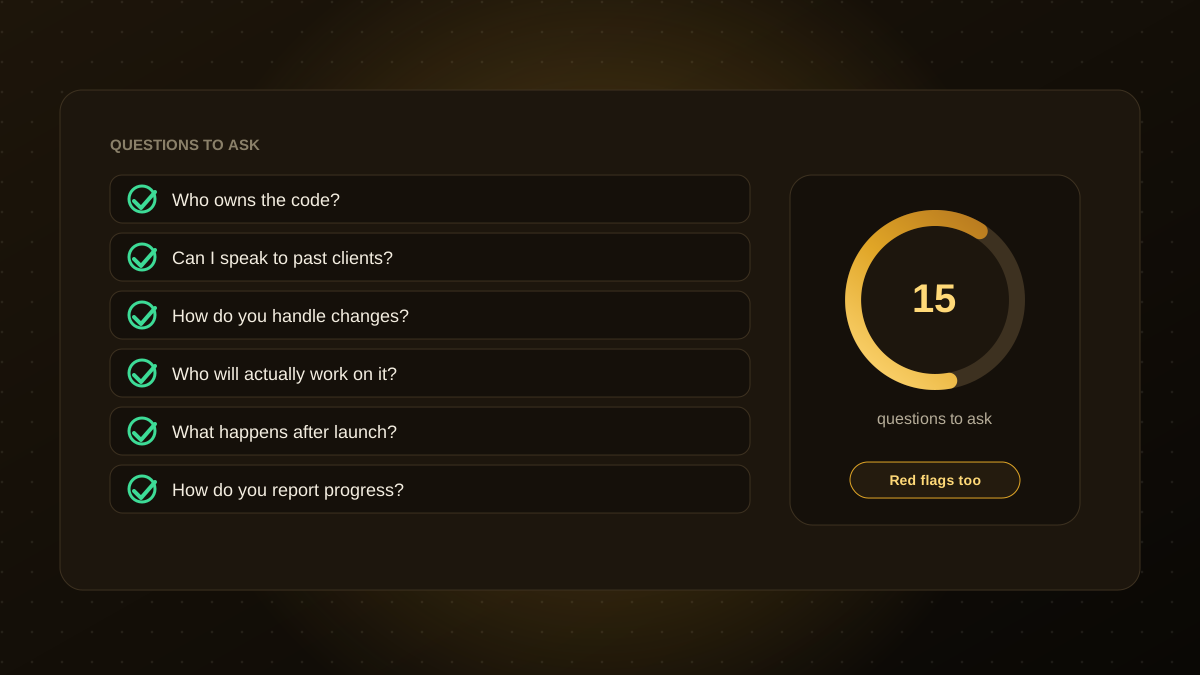
- Who owns the code and the intellectual property once I have paid? You should own it, with full access to the repositories and infrastructure.
- How is the work priced? Understand the differences between fixed price, time and materials and retainers, and what happens when scope changes. See our engagement models.
- What happens if we part ways? Check for handover, documentation and notice terms.
People and process
- Who will actually work on my project? Ask for names and roles, not just a company profile.
- How do you plan and report progress? Look for regular demos of working software, not only status reports.
- How do you handle changes and surprises? There will be some. Look for a clear, calm process.
- How do you test and review code? Expect automated tests, code review and a staging environment.
- How do you use AI tools in development, and how do you protect my code and data? A good answer is open and specific. See our guide to AI coding assistants.
Evidence and fit
- Can I speak to two or three past clients with similar projects?
- Can you show working products, or at least live examples, and explain your role in them?
- Have you built something like this before, and what went wrong on the last project?
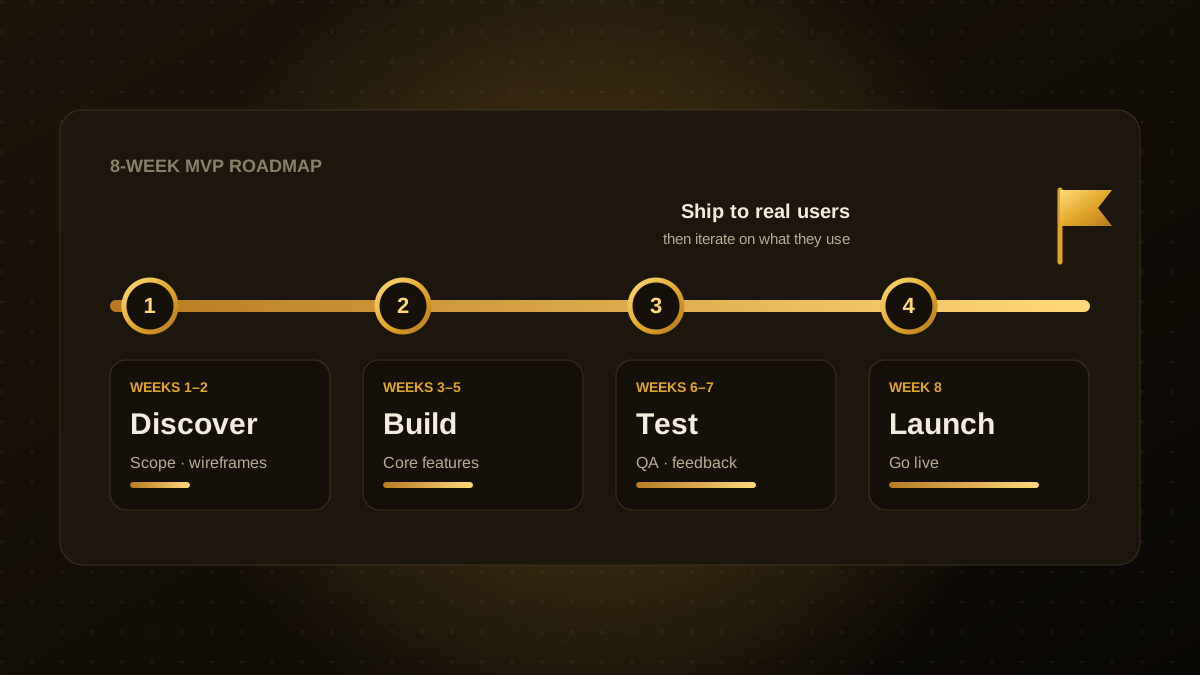
- What would you leave out of version one? A strong partner helps you cut scope. Our MVP guide shows how.
Security, support and the long term
- How do you handle security and data protection? Ask about access control, secrets, backups and incident response.
- What happens after launch? Clarify bug-fix terms, hosting, monitoring and ongoing support.
- How will we communicate, and who is my single point of contact?
Red flags
- A fixed price and timeline quoted after a short call, with no discovery.
- Prices far below everyone else, which often means cut corners or hidden extras.
- Reluctance to put code ownership in writing or to let you speak to clients.
- No questions about your users, goals or constraints.
- Guarantees of outcomes nobody can guarantee.
- Staff you never meet before signing.
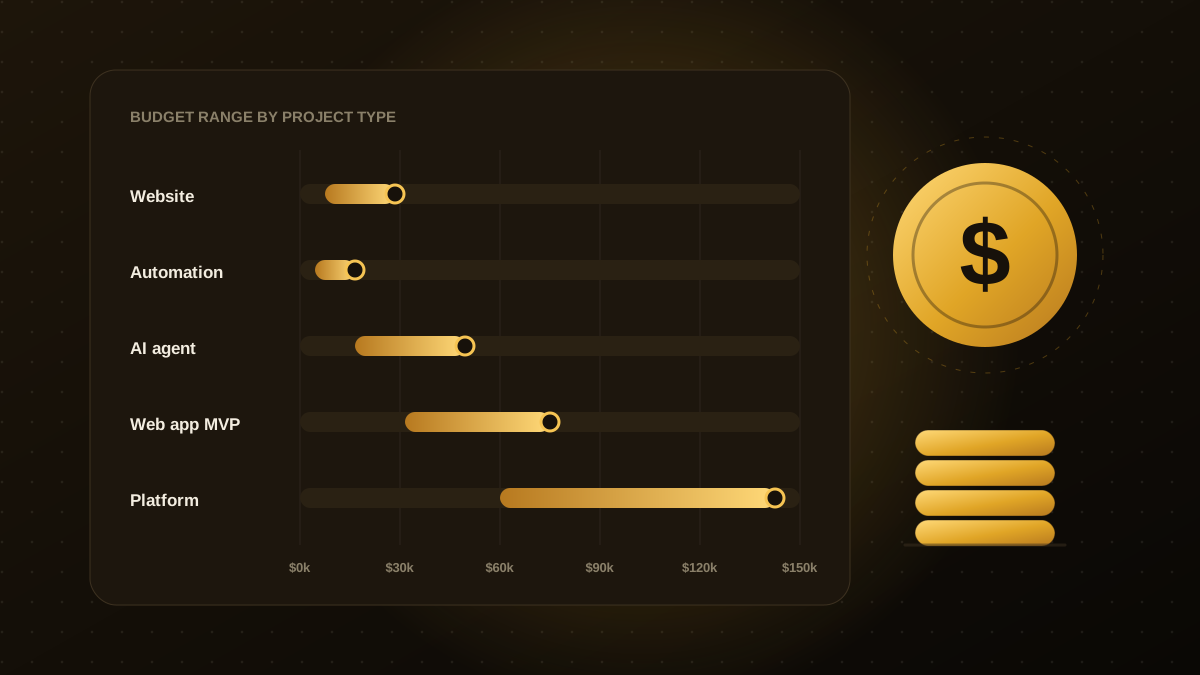
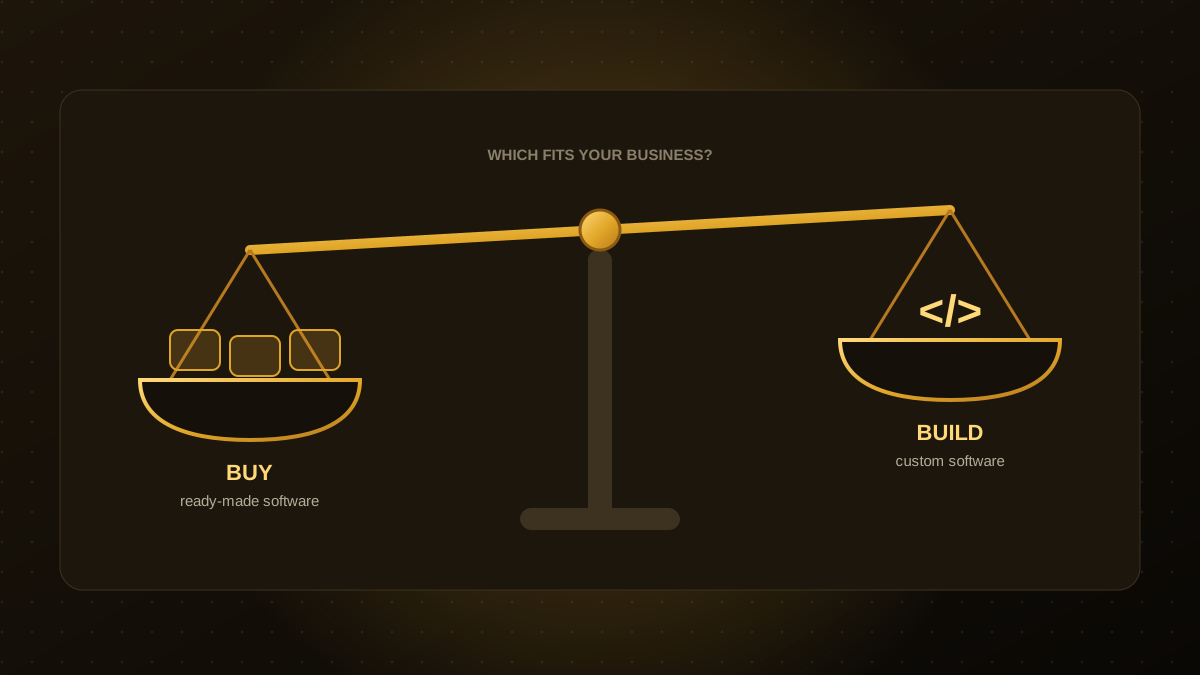
Compare proposals using the ranges in our cost guide, and consider whether building is right at all with our build versus buy framework. If you would like to see how we answer these questions, read about our process or talk to our web app development team.
Written by the Qodexify engineering team
Qodexify is a remote-first team of senior engineers building web apps, AI agents, workflow automation and websites. Learn more about our web app development service or talk to an engineer.