Key takeaways
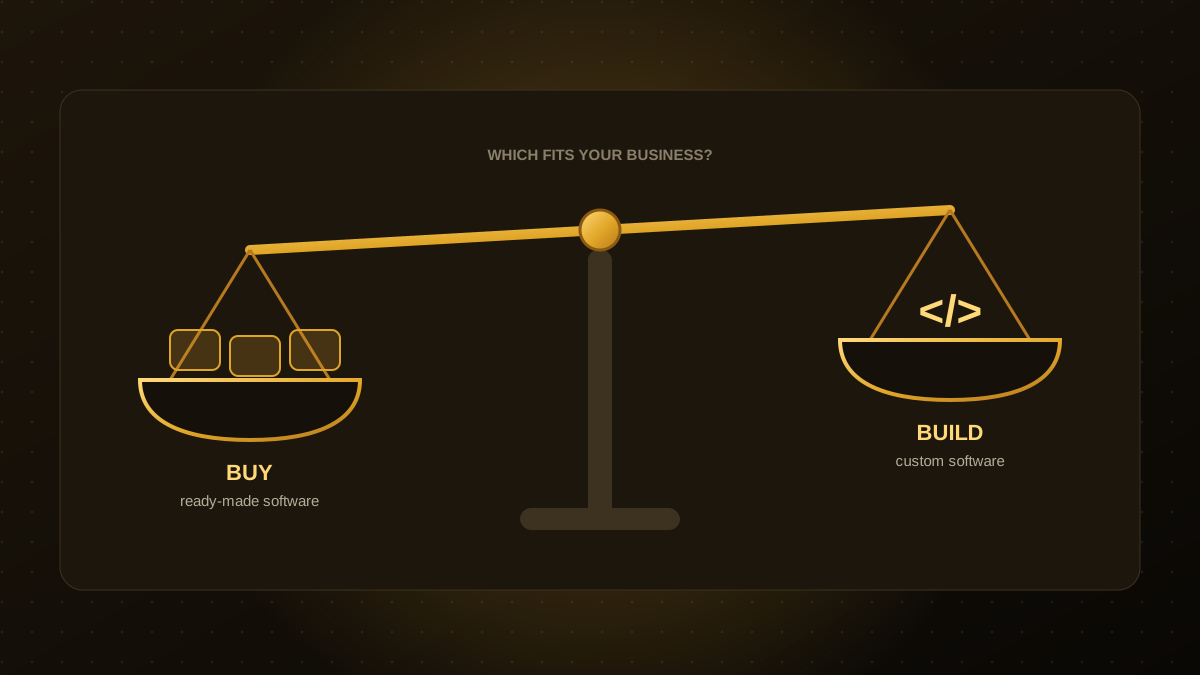
- Buy when the need is common and a good product already exists. Build when the process is a source of competitive advantage or no product fits.
- Compare total cost over three to five years, not just the first-year price. Licences per user add up quickly as you grow.
- Off-the-shelf software is faster to start; custom software is slower to start but can fit your workflow exactly.
- A hybrid approach, buying the commodity parts and building the differentiating parts, is often the best answer.
- Check the exit route in both cases: data export, code ownership and dependence on a single vendor.
The question behind the question
Build versus buy sounds like a technical choice, but it is really a business one. The right question is not "can we build this?" but "is this a place where being different makes us better?" Payroll, email and accounting are the same for most companies, so buying makes sense. The way you price jobs, match customers to suppliers or run your unique service may be what sets you apart, and that is where custom software earns its cost.
When buying is the better choice
- The need is common and mature products exist, such as accounting, HR or email marketing.
- You need to be running within days or weeks.
- Your process is flexible enough to adapt to how the product works.
- You do not want to maintain software or hire people to do so.
When building is the better choice
- Your workflow is a core part of how you compete, and generic tools force awkward workarounds.
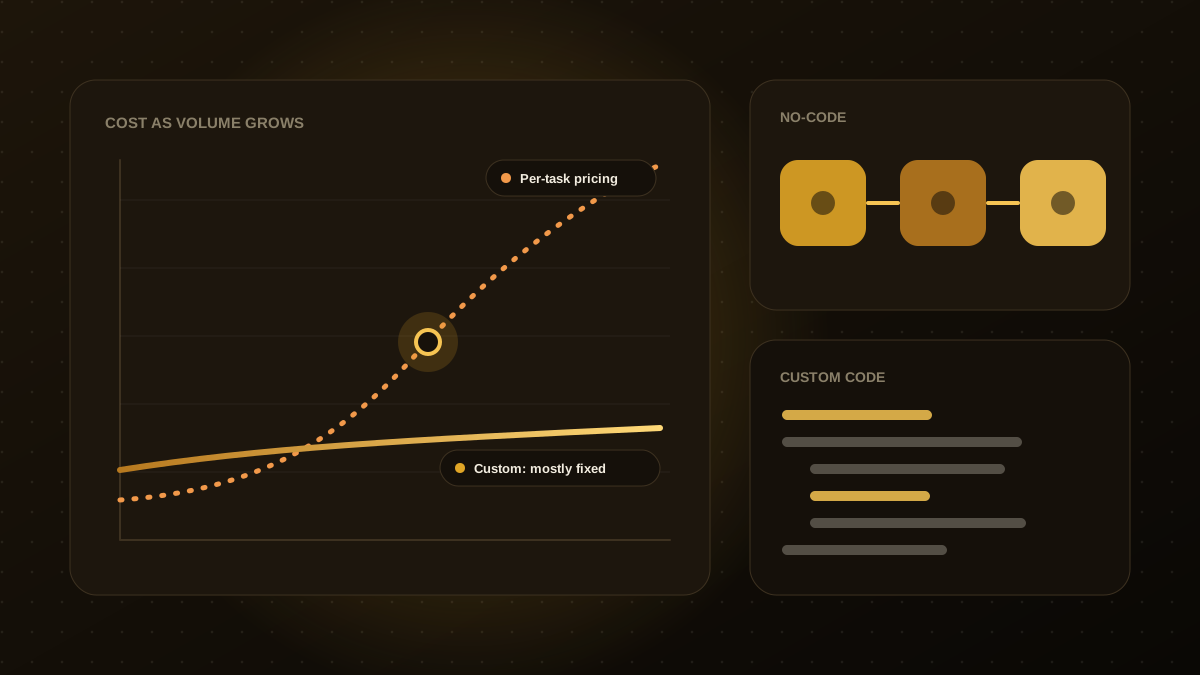
- You are paying for many licences or modules you barely use, or per-user pricing will become expensive as you grow.
- You need to connect several systems in a way no single product supports.
- You want to own the product, the data model and the roadmap, for example because the software is the product you sell.
Compare the real costs
| Buy | Build | |
|---|---|---|
| Upfront cost | Low: set-up and onboarding | Higher: design and development |
| Ongoing cost | Subscription, often per user, rising with growth | Hosting and maintenance, usually not per user |
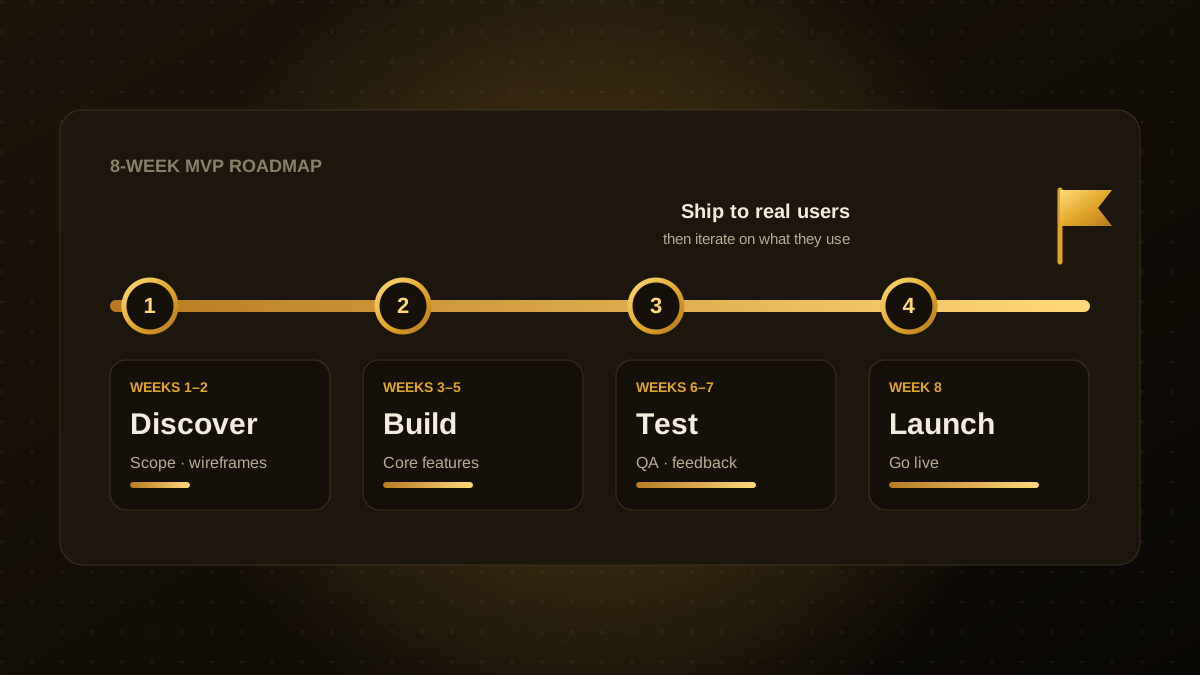
| Time to start | Days to weeks | Weeks to months |
| Fit to your process | You adapt to the product | The product adapts to you |
| Control of roadmap | Vendor decides | You decide |
| Main risks | Price rises, missing features, lock-in | Scope creep, delivery risk, upkeep |
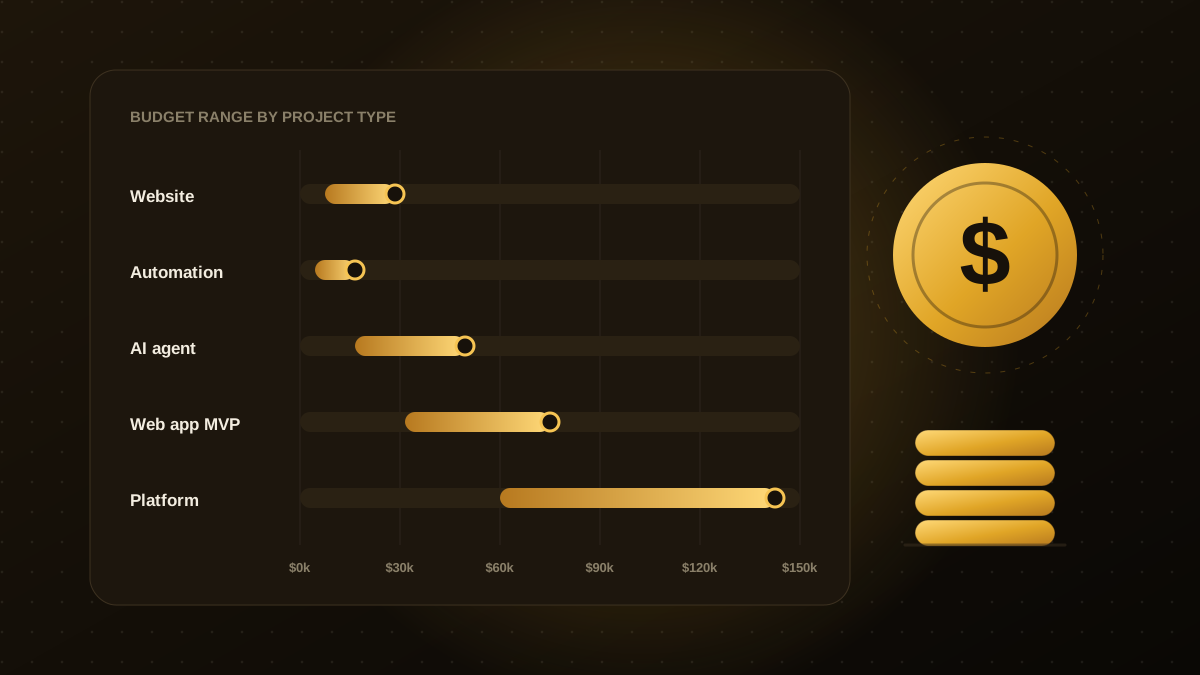
Model both options over three to five years. A product that costs little in year one can cost more than a custom build by year four once you add users, add-ons and workarounds. Include the hidden cost of staff time spent compensating for what the product cannot do.
A five-question checklist
- Is this core to how we win? If yes, lean toward building.
- Does a product cover at least 80% of what we need? If yes, lean toward buying and configure the rest.
- How fast do we need it? Tight deadlines favour buying, or buying first and building later.
- What will it cost over five years? Compare totals, not first-year prices.
- Who will own it after launch? Software needs someone to maintain it, whichever route you choose.
The hybrid approach
You rarely have to choose one or the other. Many companies buy the standard pieces, such as accounting, CRM and email, and build the pieces that make them unique, then connect everything with integrations and automation. This keeps cost and risk down while protecting what matters. It also lets you start fast: begin with a bought tool or a no-code workflow, learn what you really need, and build custom software for the parts that prove worth it. Our guide on when to outgrow no-code covers that transition.
Protect yourself either way
If you buy, confirm that you can export your data in a usable format and understand how pricing changes with scale. If you build, make sure you own the code and documentation, use mainstream technology that others can maintain, and agree on how bugs and updates will be handled. A clear exit route keeps you in control of the decision for years to come.

Qodexify is a remote-first team of senior engineers building web apps, AI agents, workflow automation and websites. Learn more about our web app development service or talk to an engineer.