Key takeaways
- AI coding assistants are now a normal part of many engineering teams, from autocomplete to agents that plan, write and test changes.
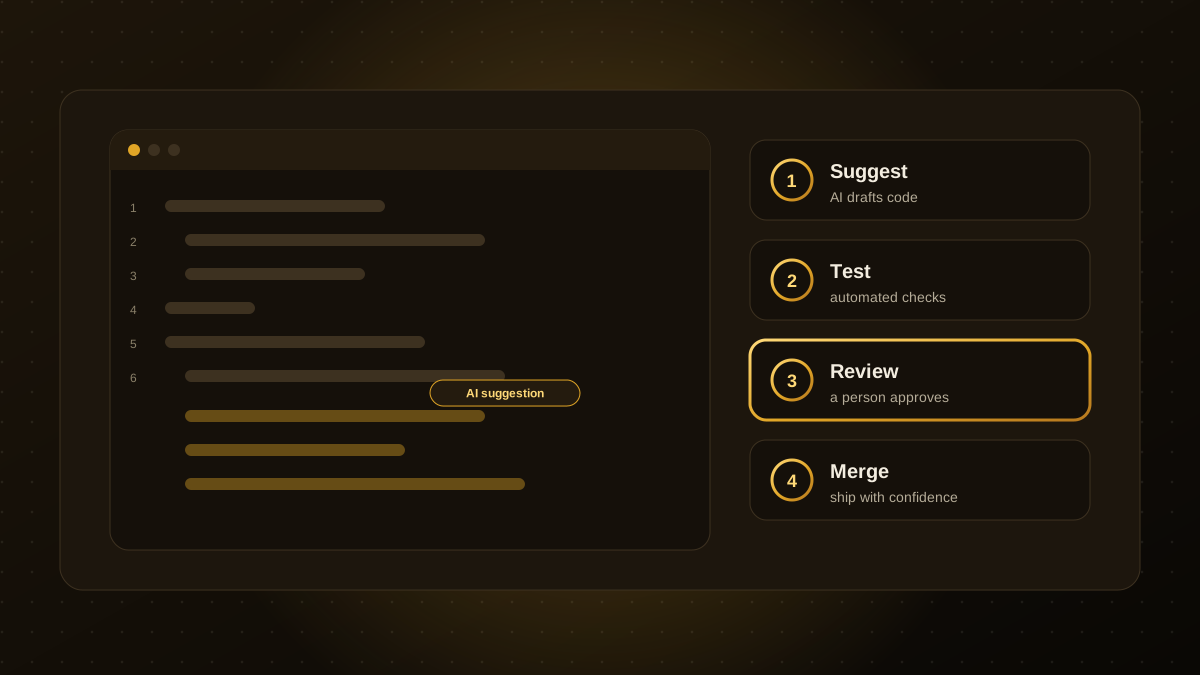
- They speed up routine work, but they also produce plausible-looking mistakes, so review and testing matter more, not less.
- Set team rules: which tools are approved, what code and data may be shared, and what must always be reviewed by a person.
- Strong automated tests, small changes and clear requirements are what make AI-assisted development safe.
- Measure outcomes such as lead time, defects and review load, not just lines of code produced.
Where the industry is
Analysts and tool vendors describe a shift from simple autocomplete toward agentic coding, where an AI system plans a change, edits several files, runs tests and proposes the result. Engineers increasingly act as directors and reviewers of that work. Anthropic's 2026 agentic coding trends report is one place to read about it, with the caveat that vendors naturally emphasise the upside.
Where assistants help most
- Boilerplate and repetitive code such as forms, API clients and data mappings.
- Writing tests and filling gaps in coverage.
- Explaining unfamiliar code and helping new team members onboard.
- Refactoring and migrations with clear, mechanical rules.
- Drafting documentation and commit messages.
Where they cause trouble
- Confident mistakes. Code that looks right but has subtle bugs, wrong assumptions or invented functions.
- Security gaps. Missing validation, unsafe defaults or leaked secrets.
- Inconsistent design. Many small additions that do not fit together, increasing maintenance cost.
- Over-trust. Reviewers skim large AI-written changes and approve them without understanding them.
- Data exposure. Proprietary code or customer data pasted into unapproved tools.
A team policy that works
- Approve tools and plans. Choose business plans with clear data-handling terms and admin controls. See our AI governance starter policy.
- Define what may be shared. No secrets, customer personal data or regulated data in prompts.
- Keep humans accountable. The person who submits a change owns it, whoever or whatever wrote it.
- Keep changes small. Small pull requests are far easier to review than large generated ones.
- Require tests. Automated tests and continuous integration catch much of what review misses.
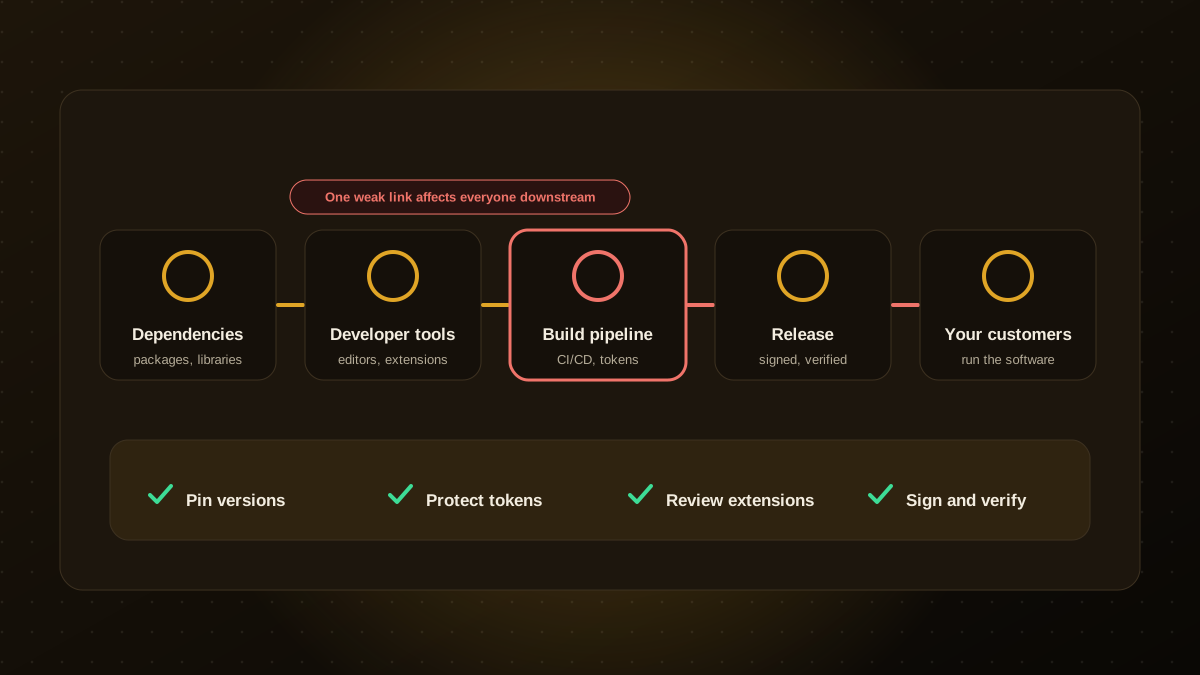
- Run security checks automatically, including dependency and secret scanning, and be careful about extensions and plugins, as covered in our guide to supply chain security.
Make requirements clearer
AI tools perform best when the task is specific. Write short specifications, acceptance criteria and examples before generating code, and keep project conventions in a shared document the assistant can read. Clear requirements help human developers just as much.
Measure what matters
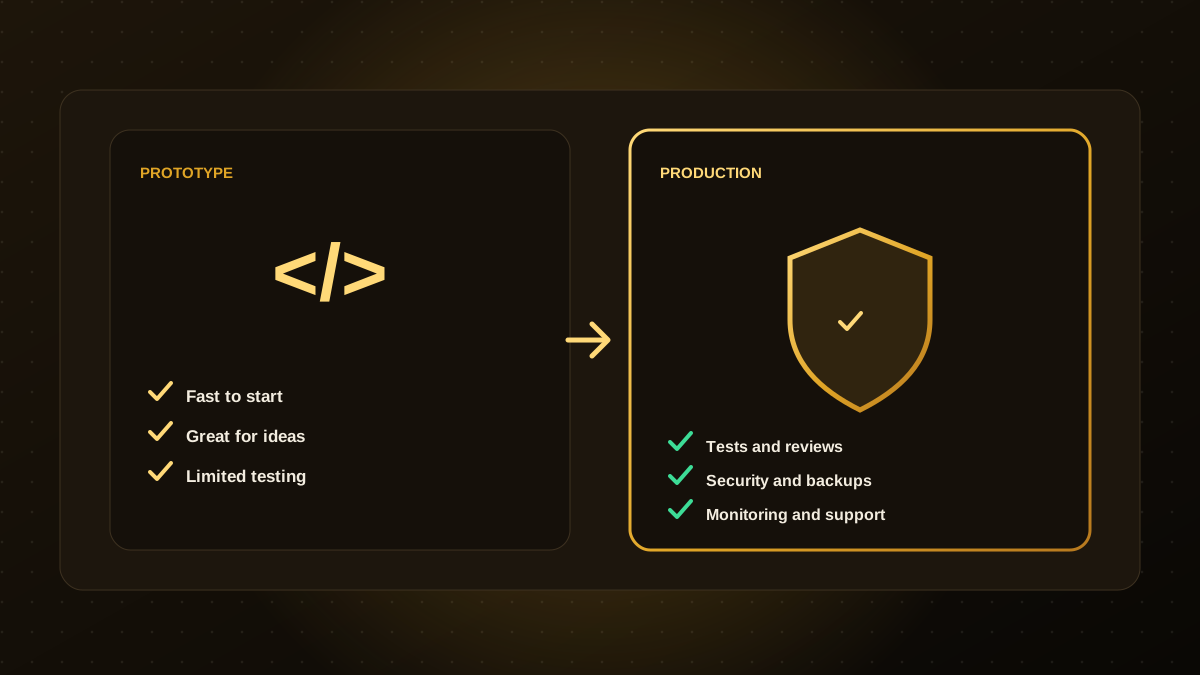
More code is not the goal. Track lead time from idea to production, defect rates, rework, review time and developer satisfaction, and compare before and after adoption. Some teams find large gains on routine work and little change on complex design work, which is useful to know when planning. For prototypes built quickly, see our guide on turning vibe-coded prototypes into production software. If you want help establishing practices like these, our web app development team can work with yours.

Qodexify is a remote-first team of senior engineers building web apps, AI agents, workflow automation and websites. Learn more about our web app development service or talk to an engineer.