Key takeaways
- AI governance means having clear rules about which AI tools are used, with what data, by whom and with what oversight.
- Start by finding out what your team already uses. Unapproved AI tools are the biggest early risk.
- Classify your data and decide what may never be pasted into an external AI tool.
- Name an owner, review higher-risk uses and train your team on the rules.
- Regulation, including the EU AI Act, is evolving and deadlines have shifted, so check the official sources for your situation.
Why a small business needs this
AI tools are easy to adopt and hard to see. Employees paste customer emails into chatbots, summarise contracts with free tools and connect assistants to company accounts, often with good intentions. Without rules, you cannot answer simple questions: which tools hold our data, who approved them and what happens if something goes wrong?
Governance does not mean slowing everyone down. It means making the safe way the easy way.
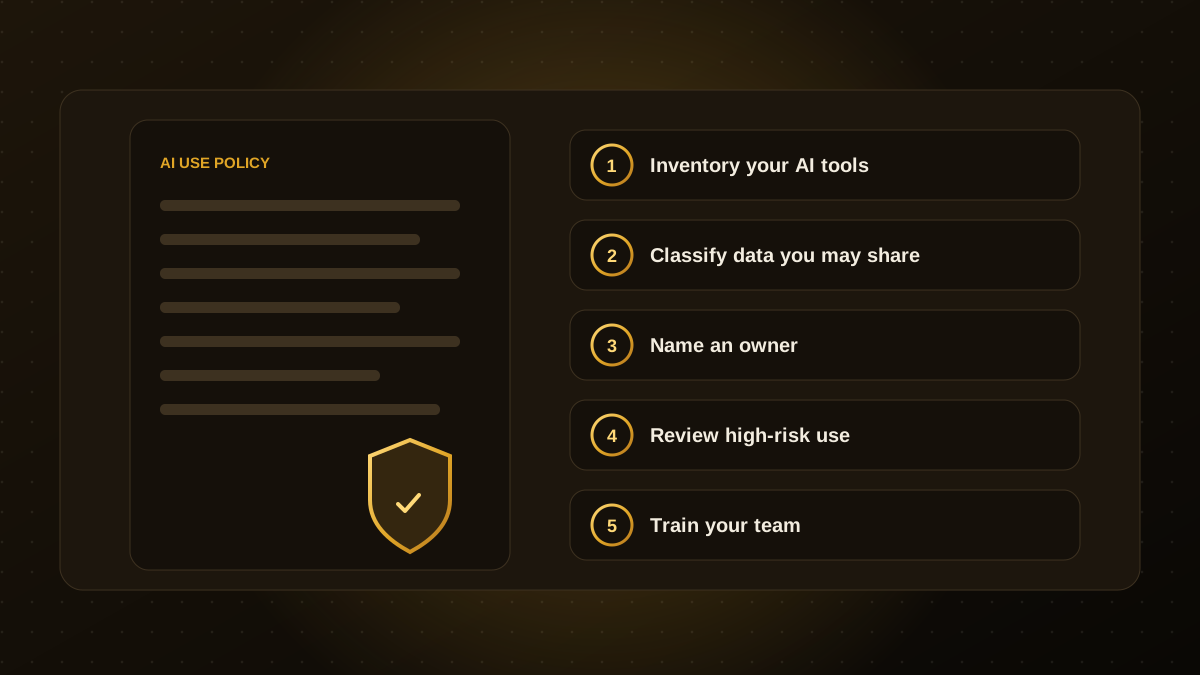
Step 1: take an inventory
List every AI tool in use, official or not: chat assistants, meeting recorders, writing tools, coding assistants and AI features inside software you already pay for. A short, friendly survey of your team usually reveals more than an IT audit. Record what each tool is used for and what data goes into it.
Step 2: classify your data
| Data type | Examples | AI tool rule |
|---|---|---|
| Public | Published web content, marketing copy | Any approved tool |
| Internal | Plans, process documents, non-sensitive notes | Approved business tools only |
| Confidential | Customer details, contracts, financials | Only tools with agreed data terms, or none |
| Restricted | Health data, payment data, credentials | Never in external AI tools |
Step 3: choose approved tools
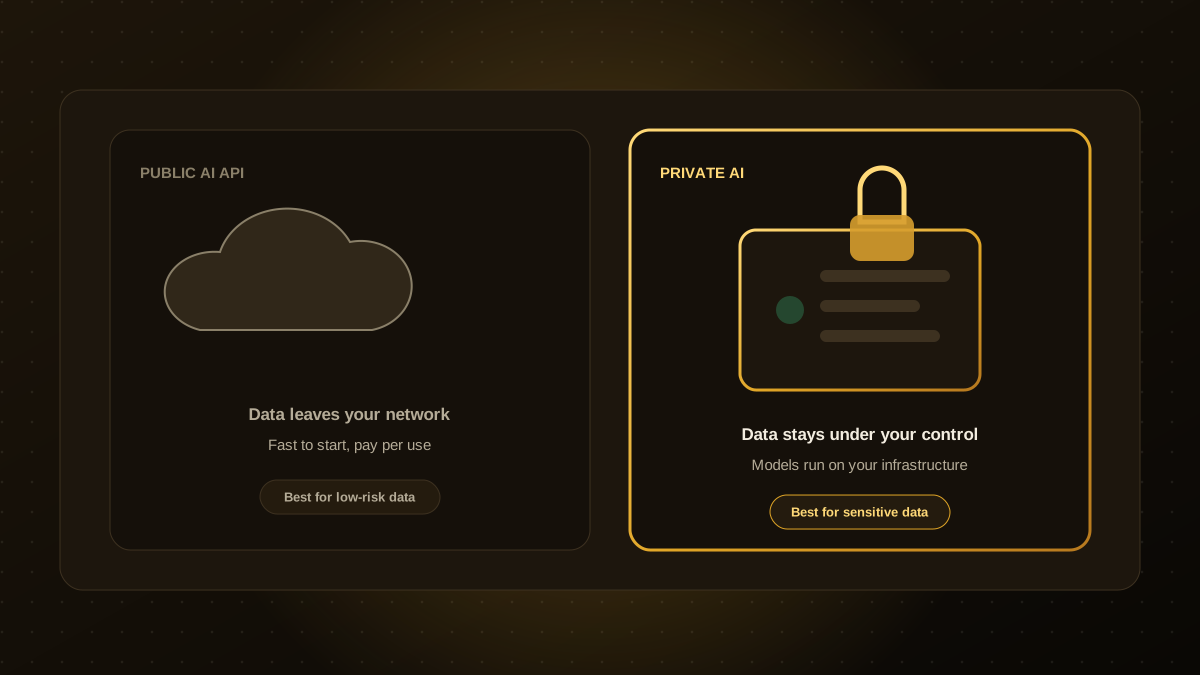
For each approved tool, check the provider's terms on data use and retention, whether your data is used to train models, where it is stored, and what security controls it offers. Prefer business plans that give you admin controls over free consumer accounts. For sensitive work, consider whether a private deployment is justified.
Step 4: name an owner and review higher-risk uses
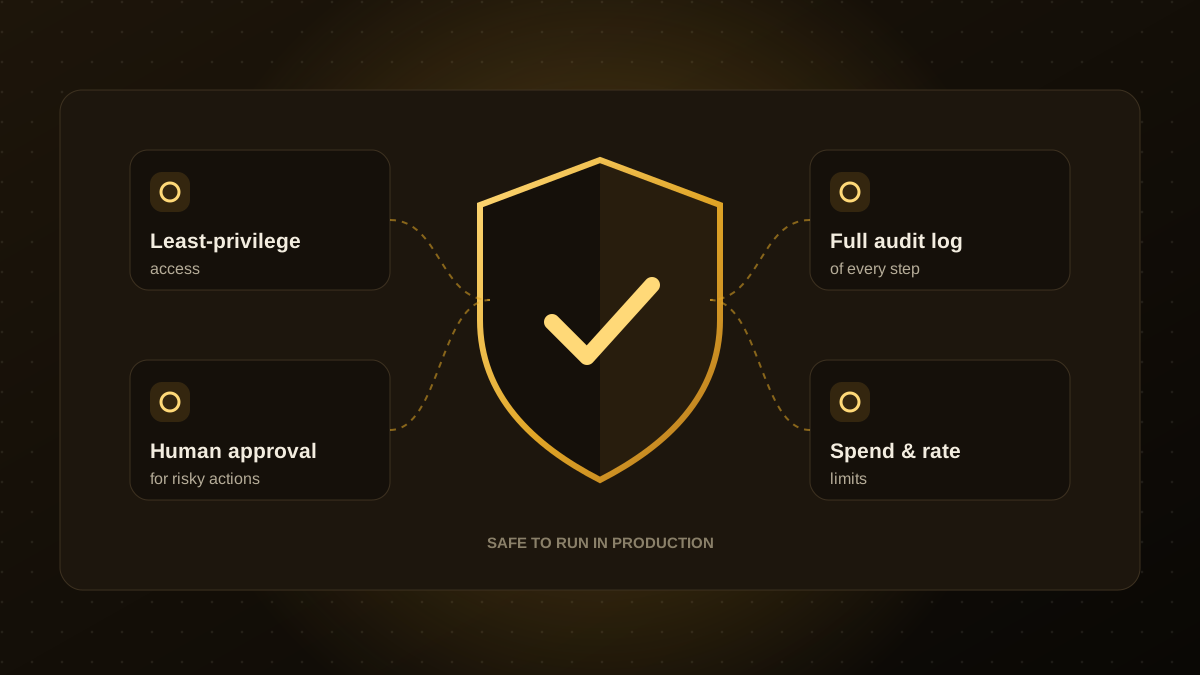
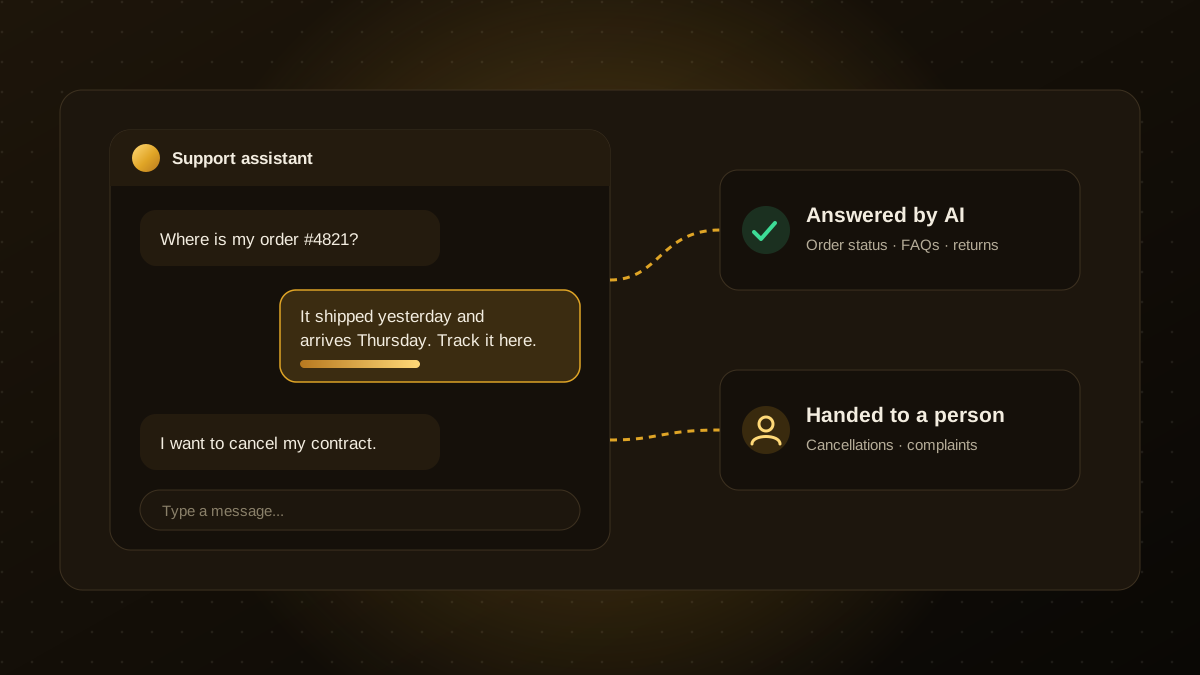
Assign one person who maintains the list and answers questions. Treat some uses as higher risk and require review before launch: anything that makes or influences decisions about people (hiring, credit, pricing, access), anything customer-facing and anything that takes actions on your systems. For agents that act, apply the controls in our guardrails guide.
Step 5: train your team and write it down
- A one-page policy in plain language: approved tools, banned data, who to ask.
- A short training session with real examples of what goes wrong.
- A simple way to report mistakes without blame, such as pasting the wrong file into a chatbot.
- A yearly review, or sooner when you adopt something new.
A note on regulation
Rules for AI are developing quickly. The EU AI Act, for example, sets obligations by risk level, and the timing of some requirements has been revised and is still being clarified. Your obligations depend on where you operate, who your customers are and what the AI does, including when you only use a third-party tool. Do not assume your vendor covers everything. Check the official guidance and take legal advice for high-risk uses. This article is general information, not legal advice.

Qodexify is a remote-first team of senior engineers building web apps, AI agents, workflow automation and websites. Learn more about our AI agent development service or talk to an engineer.