Key takeaways
- Agentic commerce means AI agents researching, comparing and sometimes completing purchases on a customer's behalf.
- Several protocols for agent-ready checkout and payments have been announced by large platforms. The landscape is still changing.
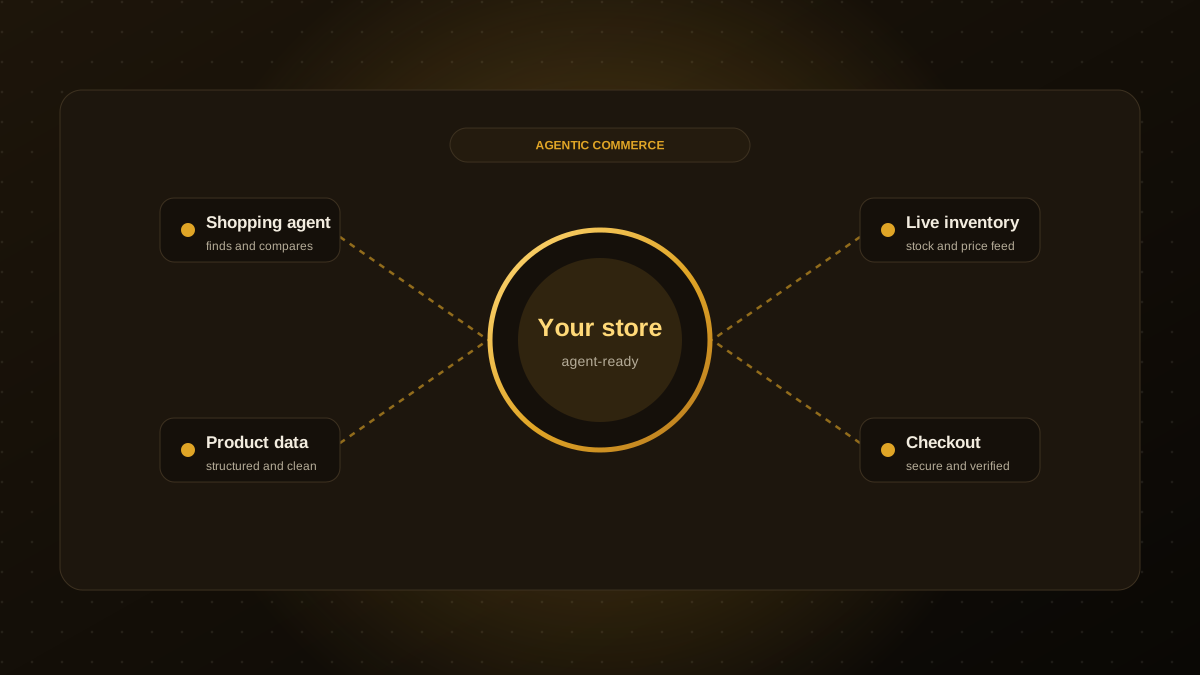
- The foundations are familiar: clean structured product data, accurate stock and price feeds and a trustworthy checkout.
- Be careful with authorisation, fraud checks and returns, because an agent is acting for a person.
- Start by making your catalogue machine-readable, then watch which protocols your platform and payment provider support.
What is changing
Shoppers have started asking AI assistants questions like "find me a waterproof jacket under $150 that ships this week". The assistant searches, compares options and may be able to complete the purchase. When it does, your store is dealing with an agent as well as a human. This shift is often called agentic commerce.
It is early. Reports describe it as moving fast but unevenly, and some announced features have changed or been withdrawn, so treat any single prediction with caution.
The protocols to know about
Large platforms have proposed open standards so that agents and merchants can transact safely. Reports from 2025 and 2026 mention, among others:
- Agentic Commerce Protocol (ACP), developed by OpenAI and Stripe, focused on checkout and delegated payment.
- Agent Payments Protocol (AP2), introduced by Google, focused on proving that a user authorised a payment.
- Universal Commerce Protocol (UCP), announced by Google with several large retailers, covering discovery through to checkout.
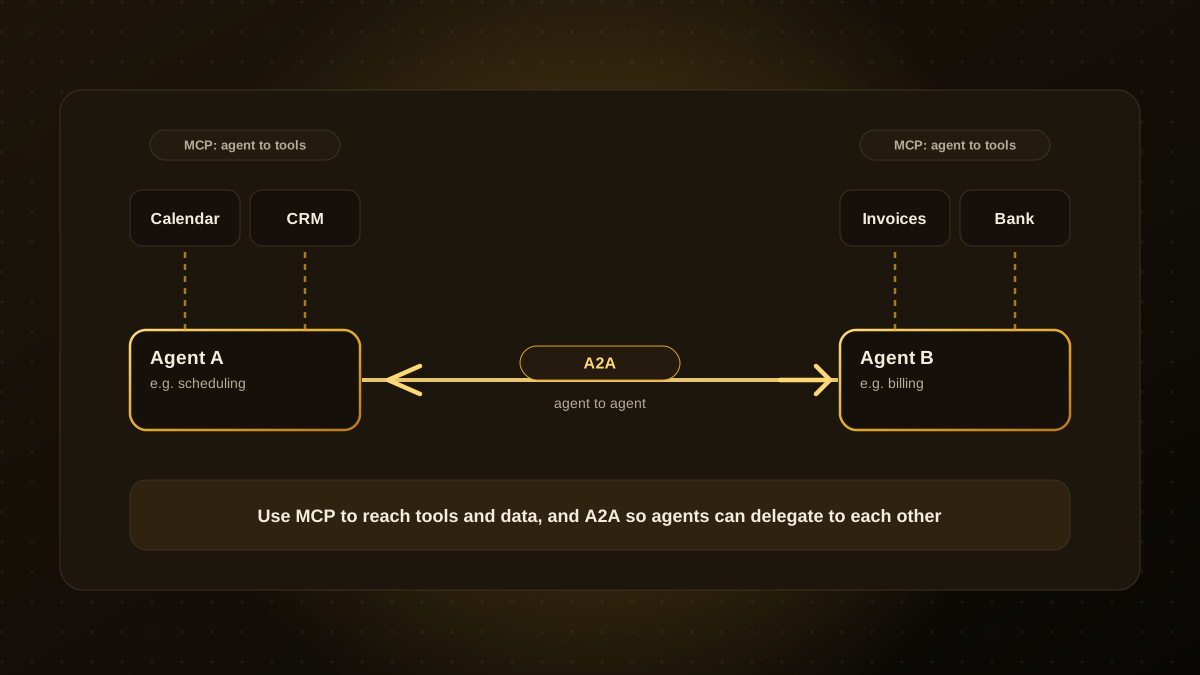
Sources generally describe these as complementary pieces rather than rivals, but details differ and change quickly. Check the official documentation of your e-commerce platform and payment provider for what they actually support. For background on how agents connect to tools more broadly, see our guides to MCP and A2A.
Make your store agent-ready
- Clean, structured product data. Accurate titles, attributes, sizes, materials, prices and availability, ideally with schema.org product markup.
- Live inventory and shipping information. Agents compare options in seconds, so stale stock or delivery estimates cost you trust.
- Clear policies in plain language. Returns, warranties and shipping rules should be easy for a machine and a person to read.
- Fast, reliable pages and APIs that do not block legitimate automated visitors.
- A trustworthy checkout that can verify who authorised the purchase.
- Good reviews and consistent facts across your site and marketplaces, which also help your visibility in AI search.
Risks to plan for
- Authorisation. How do you know the customer really approved this order, up to what amount and for which items?
- Fraud and abuse. Automated buying makes bots harder to tell apart from real agents. Use risk checks and rate limits.
- Disputes and returns. Define who is responsible when an agent buys the wrong thing.
- Brand and pricing. Agents compare ruthlessly. Differentiate on value, service and trust, not only price.
- Data sharing. Be deliberate about which customer data you expose to which agent.
Where to start
You do not need to build anything exotic today. Audit your product data, fix gaps, expose reliable stock and price feeds and talk to your platform and payment provider about their agent roadmap. Watch for early traffic from AI assistants in your analytics. If you want a review of how ready your store is, our e-commerce development team can help.

Qodexify is a remote-first team of senior engineers building web apps, AI agents, workflow automation and websites. Learn more about our e-commerce development service or talk to an engineer.