Key takeaways
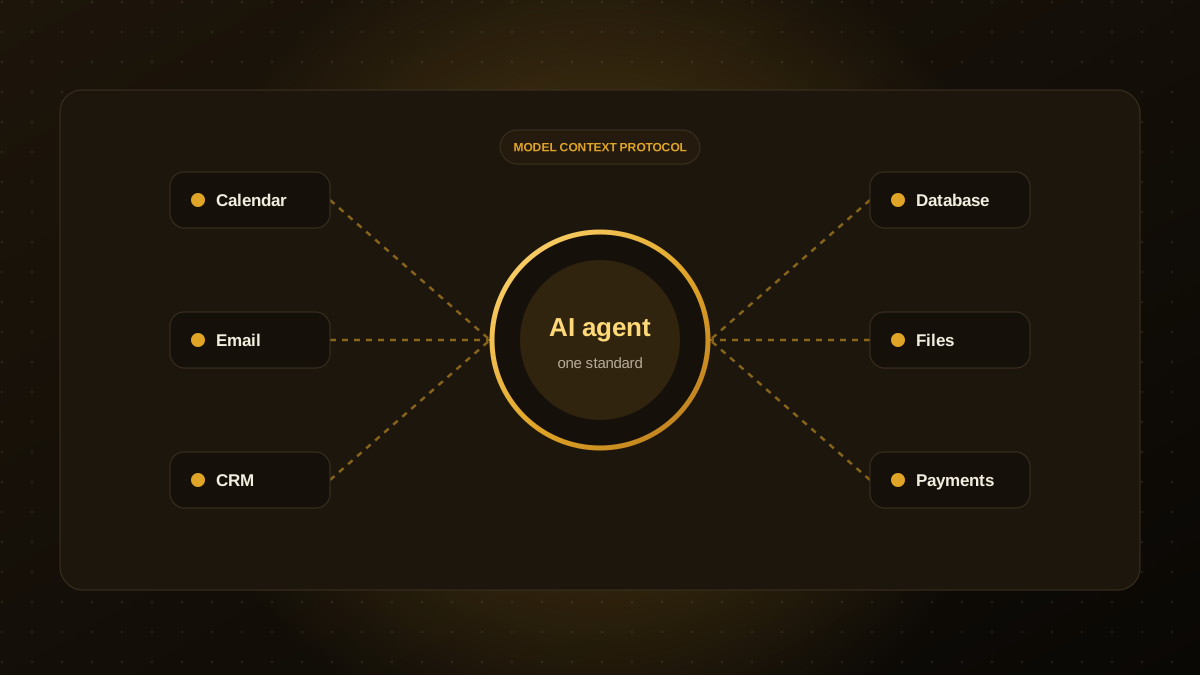
- The Model Context Protocol (MCP) standardises how an agent connects to tools and data. It is a link between an agent and its capabilities.
- The Agent2Agent protocol (A2A) standardises how independent agents discover each other, exchange messages and hand off work.
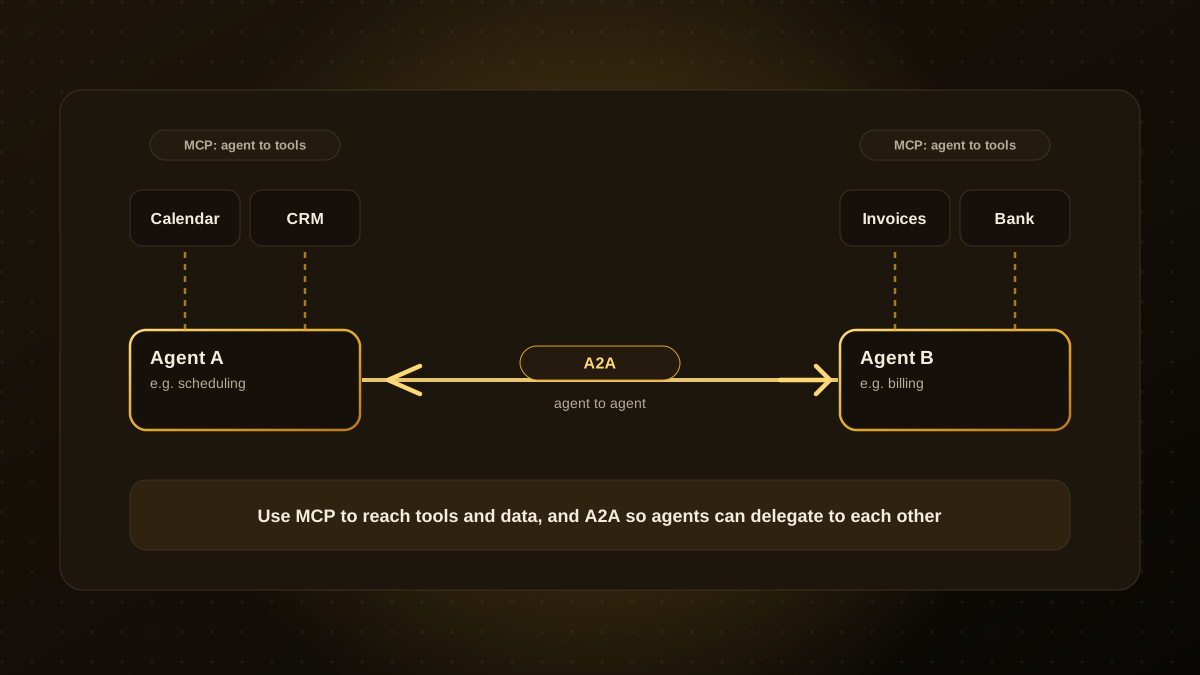
- They are complementary, not competing. Many systems use MCP inside an agent and A2A between agents.
- Most businesses need MCP first. A2A matters when several agents, often from different teams or vendors, must cooperate.
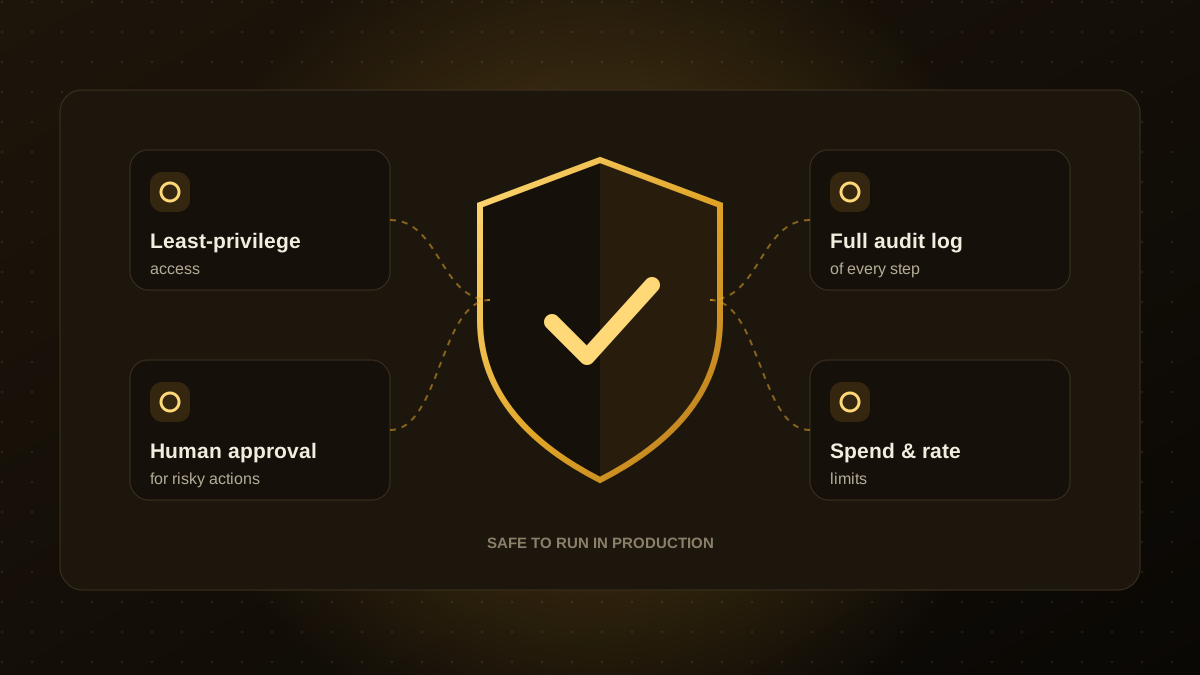
- Security and permissions matter even more when agents talk to each other, so log, limit and approve.
Two different problems
As AI agents spread, two questions keep coming up. How does an agent reach the tools and data it needs? And how do separate agents, perhaps built by different teams or companies, work together? Two open protocols have emerged, one for each.
MCP: agent to tools
The Model Context Protocol gives an agent a standard way to discover and call tools, read data and use prompts exposed by a server. Think of it as a vertical connection from an agent down to its capabilities: a calendar, a database, a CRM. We explain it in our guide to the Model Context Protocol.
A2A: agent to agent
The Agent2Agent protocol, introduced by Google and since hosted under the Linux Foundation, defines how agents describe what they can do, send each other tasks and return results, even when they are built with different frameworks. It is a horizontal connection between agents. For example, a scheduling agent could ask a billing agent to confirm a customer's payment status before booking a premium slot.
How they fit together
| MCP | A2A | |
|---|---|---|
| Connects | An agent to tools and data | An agent to other agents |
| Direction | Vertical | Horizontal |
| Typical question | "Can the agent look up this invoice?" | "Can another agent handle this task for me?" |
| Needed when | Almost any useful agent | Several agents must cooperate |
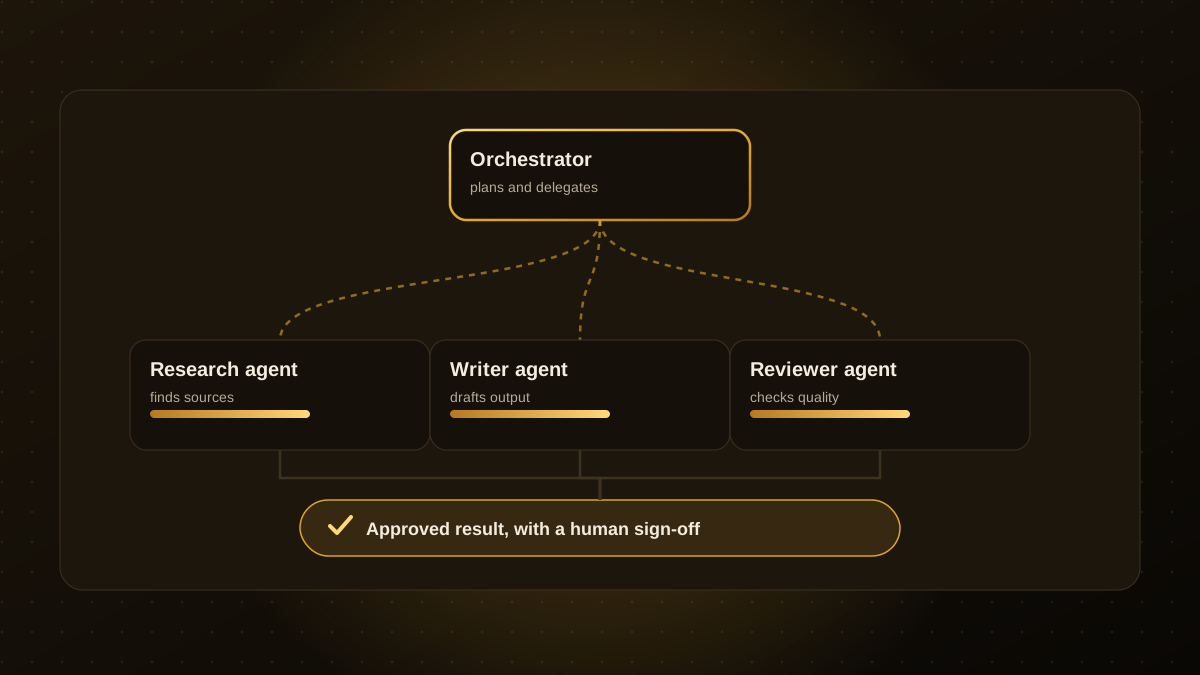
Sources describing both protocols generally treat them as complementary. A typical design has an orchestrator agent that uses MCP to reach documents and databases, and A2A to delegate sub-tasks to specialist agents. Many comparisons online are written by vendors, so check claims against the official specifications.
When your business needs which
- One agent, several tools: start with MCP. This covers most first projects.
- Several agents inside one team or product: a framework may be enough, as in our guide to multi-agent systems.
- Agents from different teams or vendors that must cooperate: A2A becomes valuable, because a common protocol avoids custom point-to-point integrations.
Security when agents talk to agents
Every connection is a new place for mistakes or attacks. Authenticate each agent, limit what each may request, validate what comes back, keep humans in the loop for consequential actions and log every exchange. A message from another agent is untrusted input until proven otherwise. Our AI agent guardrails apply directly. If you want to expose your systems to agents safely, our MCP server development team can help you design the first connections.
Qodexify is a remote-first team of senior engineers building web apps, AI agents, workflow automation and websites. Learn more about our MCP server development service or talk to an engineer.