Key takeaways
- A hosted platform such as Shopify is the fastest, lowest-risk way to start selling for most stores.
- Custom builds suit unusual products, complex pricing or workflows, and businesses where the store is the product.
- Compare total cost over three to five years, including apps, transaction fees, development and upkeep.
- A hybrid, using a platform for the commerce core and custom code for the storefront or integrations, is common.
- Whatever you choose, make sure you can export your data and keep control of your customer relationships.
The honest default
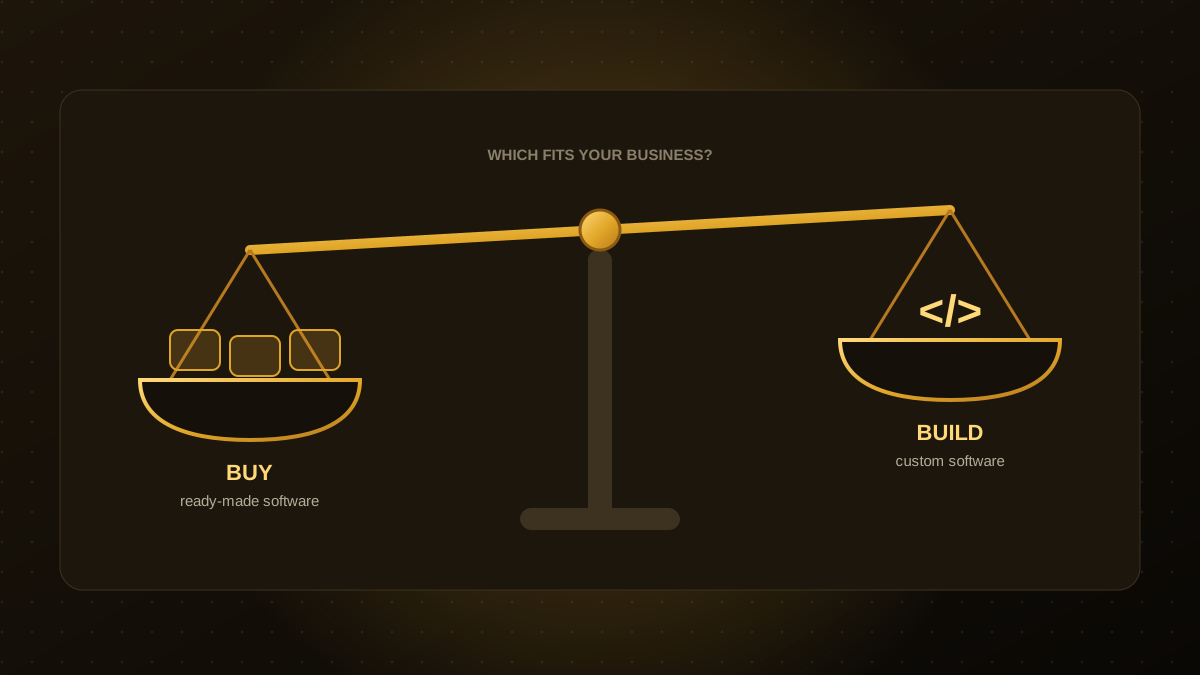
For most new online stores, a hosted platform is the right starting point. It handles hosting, checkout, payments, security updates and a large ecosystem of themes and apps, so you can focus on products and marketing. A custom build is a bigger commitment and needs a clear reason.
Side-by-side
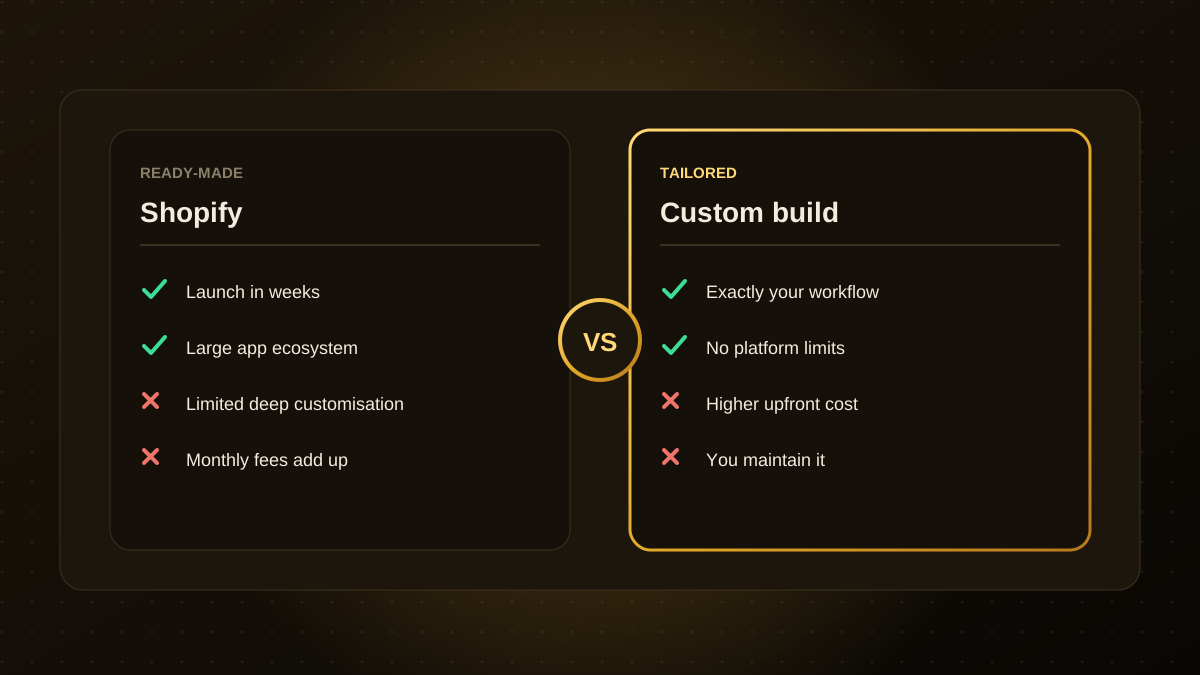
| Hosted platform (e.g. Shopify) | Custom build | |
|---|---|---|
| Time to launch | Days to weeks | Months |
| Upfront cost | Low | High |
| Running cost | Subscription, app fees, transaction fees | Hosting, maintenance, development time |
| Flexibility | Good within the platform's model | Unlimited |
| Maintenance | Handled by the platform | Your responsibility |
| Lock-in | Moderate, data is exportable | Low, you own the code |
Signs a hosted platform is enough
- You sell standard physical or digital products with normal variants and prices.
- You want to launch quickly and learn from customers.
- Apps and themes already cover what you need.
- You would rather not manage servers, payments compliance and security patches.
Signs you may need custom
- Pricing, configuration or fulfilment logic is complex, such as made-to-order products, B2B contract pricing or subscriptions with unusual rules.
- You need deep integration with ERP, warehouse or CRM systems that apps cannot cover.
- App fees and workarounds have become a significant cost.
- The shopping experience itself is your differentiator.
- You operate a marketplace or multi-vendor model.
The middle path
Many businesses combine approaches. They use a platform for products, checkout and orders, and build a custom storefront on top through its APIs, or add custom apps and integrations around it. This keeps the strengths of the platform while giving freedom where it matters. Our guides on Next.js versus WordPress and site speed apply here too, because speed affects conversion.
How to decide
- List the capabilities you truly need on day one.
- Check which of them the platform and its apps cover, and what they cost per month.
- Estimate the cost and timeline of building the gaps yourself.
- Model three to five years of total cost for both paths.
- Choose the option that gets you selling soonest with a route to grow, and revisit it when your volumes or needs change.
Our broader build versus buy framework explains the thinking, and our e-commerce development team can help you compare the options for your store.

Qodexify is a remote-first team of senior engineers building web apps, AI agents, workflow automation and websites. Learn more about our e-commerce development service or talk to an engineer.