Key takeaways
- Start with the questions customers ask most often: order status, returns, password resets and basic how-to questions.
- Ground the AI in your own help articles and policies so it answers from facts, with sources, rather than guessing.
- Make it easy to reach a person. Hand off complaints, cancellations and emotional conversations to a human, along with the full context.
- Measure resolution quality and customer satisfaction, not just how many conversations the AI handled.
- Launch with a small scope, review conversations weekly and expand once accuracy is proven.
What AI can do well in support
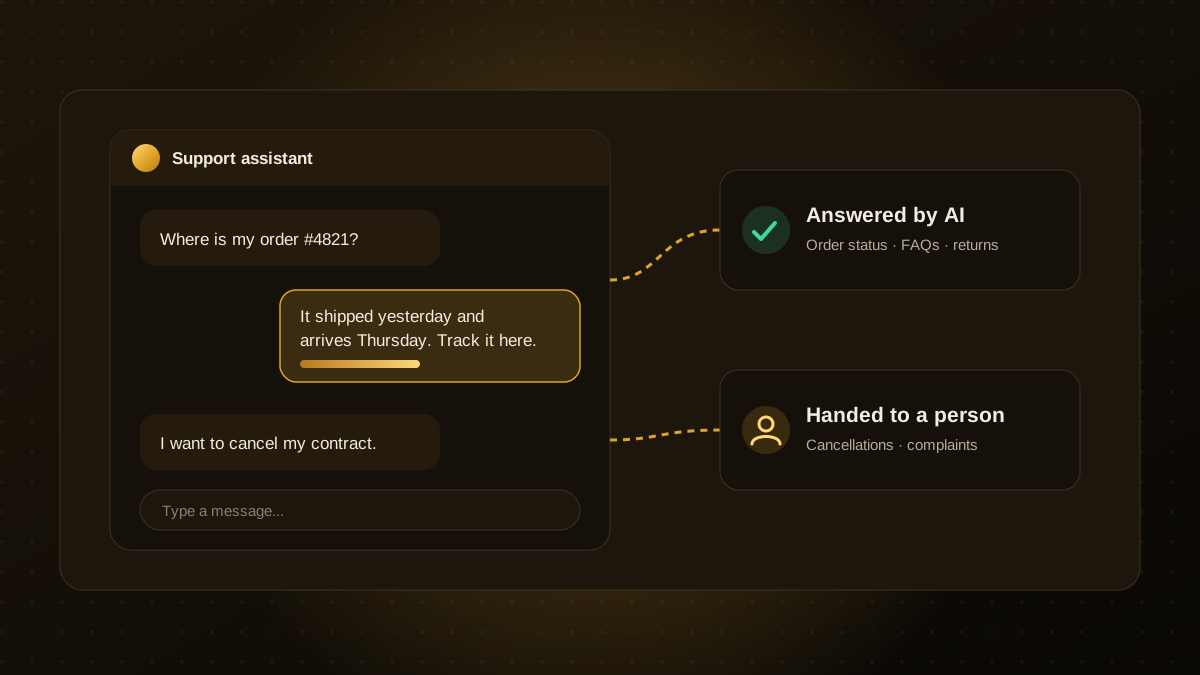
Modern AI assistants can understand free-text questions, find the right information and write a clear reply in seconds, at any hour. They are strongest on repetitive, well-documented questions where the answer already exists in your help centre or systems. Typical examples include order status, delivery times, return policies, plan features, account how-tos and troubleshooting steps.
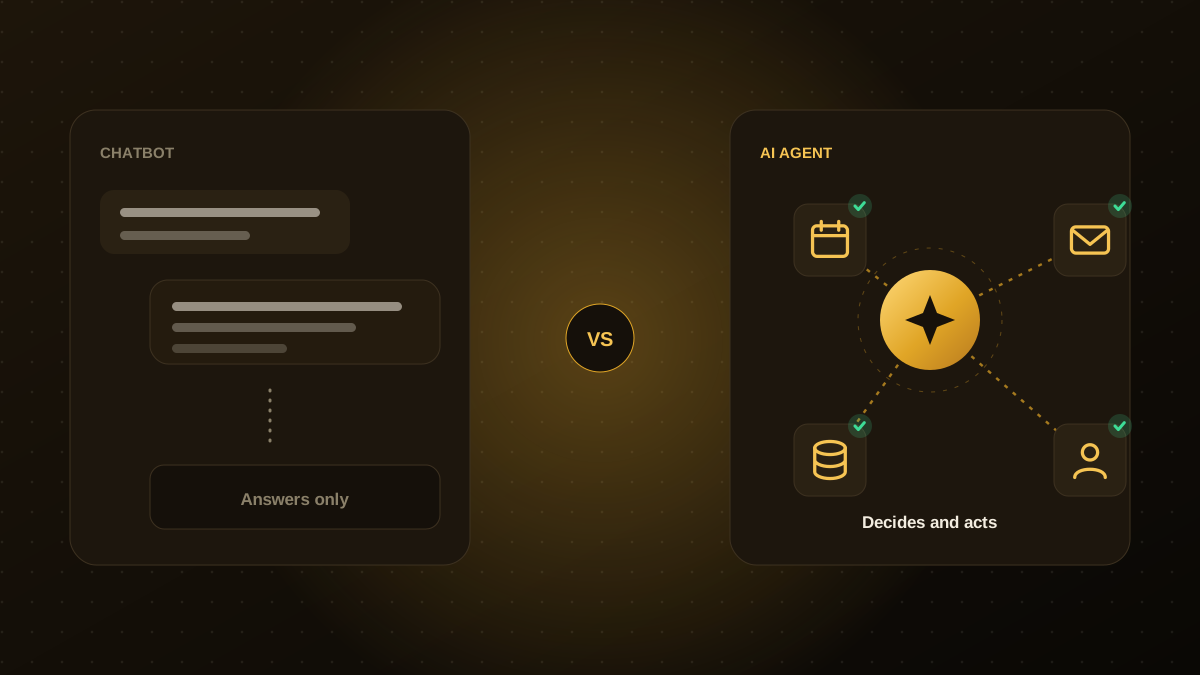
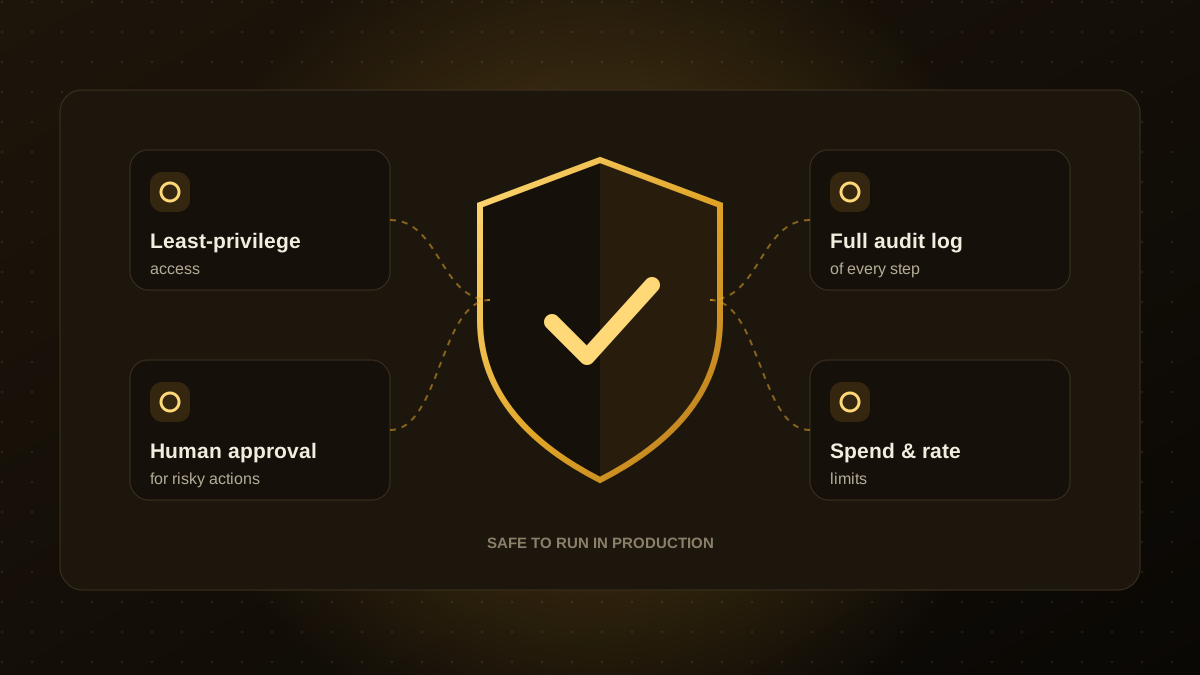
With access to the right systems, an assistant can go beyond answering and take simple actions, such as looking up an order, creating a return label or updating a delivery address. At that point it becomes an AI agent rather than a basic chatbot, and it should follow the safeguards described in our guide to AI agent guardrails.
What to keep human
- Complaints and upset customers. Empathy and judgement matter most here.
- Cancellations, refunds above a set amount and contract changes. These carry financial and relationship risk.
- Complex or unusual cases where the right answer depends on context the AI cannot see.
- Anything involving safety, legal or medical advice.
Design the handoff deliberately. The customer should never have to repeat themselves, so pass the conversation history and any collected details to the human agent.
Ground answers in your own knowledge
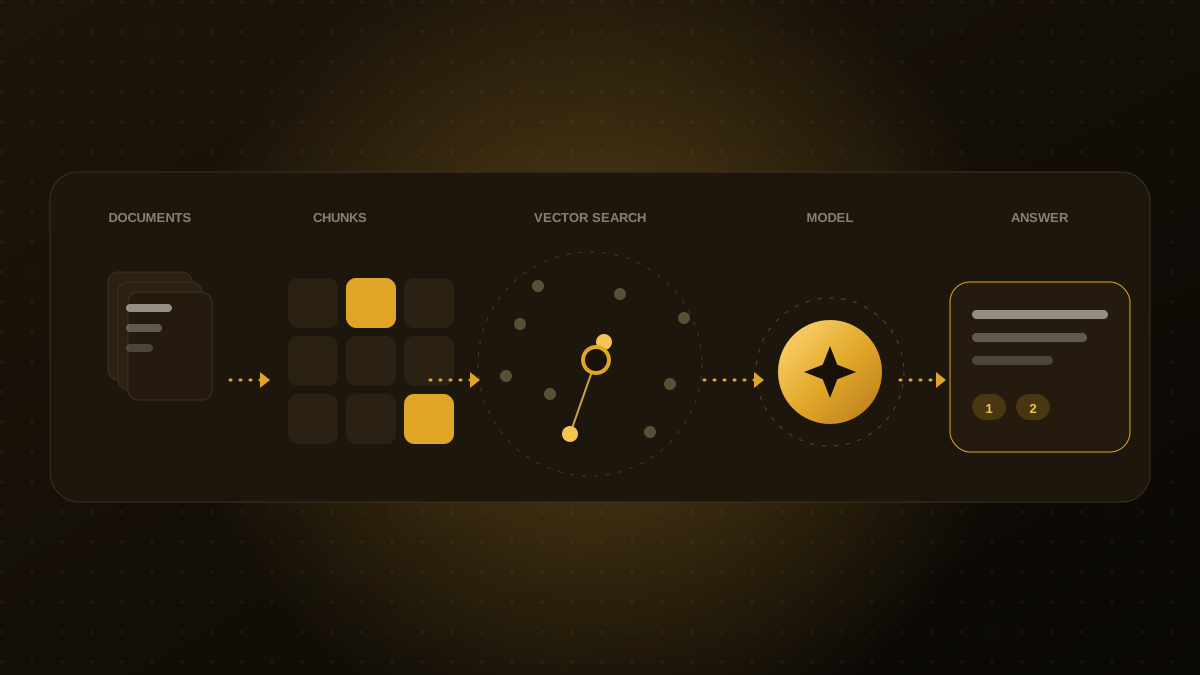
The biggest quality risk is an assistant that invents an answer. The fix is retrieval: the assistant looks up relevant passages from your help centre, policies and product documentation and answers only from them, ideally with links to the source. This technique, covered in our explainer on retrieval-augmented generation, keeps answers accurate and up to date when you change a policy.
Tell the assistant what to do when it does not know: say so and offer a human. A confident wrong answer is far worse than an honest handoff.
A rollout plan that works
| Phase | What you do |
|---|---|
| 1. Analyse | Review a few hundred past tickets and list the most frequent, most repetitive questions. |
| 2. Prepare | Clean up help articles, fill gaps and mark which topics need a human. |
| 3. Pilot | Launch to a small share of traffic or in suggest-a-reply mode, where agents approve drafts. |
| 4. Review | Read real conversations weekly, fix wrong answers, and update content and prompts. |
| 5. Expand | Add topics and actions gradually as accuracy and trust grow. |
A useful first step is a draft-assist mode: the AI writes a suggested reply and a support agent edits and sends it. This speeds up the team immediately and gives you a safe way to measure quality before customers talk to the AI directly.
How to measure success
- Resolution rate: the share of conversations actually resolved without a human, checked by sampling, not just by closed tickets.
- Customer satisfaction: compare AI-handled and human-handled conversations.
- Escalation quality: whether handoffs arrive with full context.
- First response and resolution time.
- Accuracy: review a weekly sample for wrong, outdated or risky answers.
Common mistakes
- Hiding the way to a human, which frustrates customers and damages trust.
- Launching on a messy knowledge base, so the AI repeats outdated information.
- Measuring deflection only. A customer who gives up is not a resolved customer.
- Skipping privacy review. Decide what customer data may be sent to external AI providers and tell customers how it is used.
Done well, AI support lets your team spend their time on the conversations that need a person, while customers get instant answers to everything else.

Qodexify is a remote-first team of senior engineers building web apps, AI agents, workflow automation and websites. Learn more about our AI agent development service or talk to an engineer.