
Service
MCP Server Development.
Give AI agents safe, controlled access to your CRM, databases and internal tools through one standard interface, built to production security standards.
What is an MCP server?
The Model Context Protocol (MCP) is an open standard for connecting AI applications to tools and data. An MCP server sits in front of a system, such as your CRM or database, and exposes specific operations that compatible AI clients can discover and call. Qodexify builds custom MCP servers with authentication, least-privilege permissions, validation and logging. A typical server takes 1–4 weeks and costs roughly $4,000–$15,000.
What’s included
What we build into every MCP server
Well-designed tools
Clear, narrow operations with descriptive names and strict input validation, so agents call them correctly.
Authentication and least privilege
Scoped credentials and per-user permissions, so an agent can only do what its user is allowed to do.
Read-only first
We start with safe lookups and add write actions one at a time, with approval steps where risk is higher.
Remote or local deployment
Hosted securely in your cloud or run locally, with versioning and documentation.
Logging and monitoring
Every call is recorded with who, what and when, with alerts for unusual use and rate limits.
Works with your AI stack
Compatible with major MCP clients and your own agents, so you are not tied to a single vendor.
Our approach
How a mcp server development project runs
Choose the system and tasks
We pick one system and the questions or actions that create the most value.
Design the tools
We define each operation, its inputs, permissions and approval rules.
Build and secure
We implement the server with authentication, validation, logging and limits.
Test with real agents
We test with real prompts and adversarial cases, then roll out gradually.
Use cases
What teams connect with MCP
Common projects where this service delivers the fastest return.
CRM and sales data
Let assistants look up accounts, log activity and draft follow-ups.
Databases and reporting
Answer data questions in plain language with governed, read-only queries.
Ticketing and support tools
Search, summarise and update tickets from a conversation.
Documents and knowledge
Expose wikis and file stores to agents, with permissions respected.
Finance and ERP
Check invoices, balances and approvals with strict controls.
Developer and DevOps tools
Give coding assistants safe access to repositories, logs and deployment status.
Cost & timeline
Typical timeline and budget
Indicative ranges for projects of this kind. Pricing depends on the number of tools, the system's API quality and security requirements.
| Project type | Typical timeline | Typical budget |
|---|---|---|
| Single system, read-only tools | 1–2 weeks | $4k–$8k |
| Multi-tool server with write actions and approvals | 2–4 weeks | $8k–$15k |
| Enterprise MCP gateway with SSO and audit logging | 4–8 weeks | $15k–$35k |
FAQ
Frequently asked questions
Do we need a custom MCP server, or can we use an existing one?
Existing servers are fine for common SaaS tools. For internal systems, sensitive data or strict security needs, a custom server lets you control exactly what is exposed and how it is authenticated.
Is MCP secure?
MCP is a protocol, not a security guarantee. Security comes from how the server is built: authentication, narrow permissions, input validation, logging and human approval for risky actions, all of which we implement.
Which AI tools can use the server?
Any MCP-compatible client, including popular AI assistants and agent frameworks, as well as your own applications.
Can agents change data, or only read it?
We usually start read-only and add write operations one at a time, each with validation and, where appropriate, human approval.
How do you handle credentials?
Secrets are stored in a secrets manager, scoped to the minimum required and rotated. We prefer per-user authorisation over shared keys.
Can you also build the agent that uses it?
Yes. An MCP server is often paired with an AI agent or assistant. See our AI agent development service.
From the blog
Guides on this topic
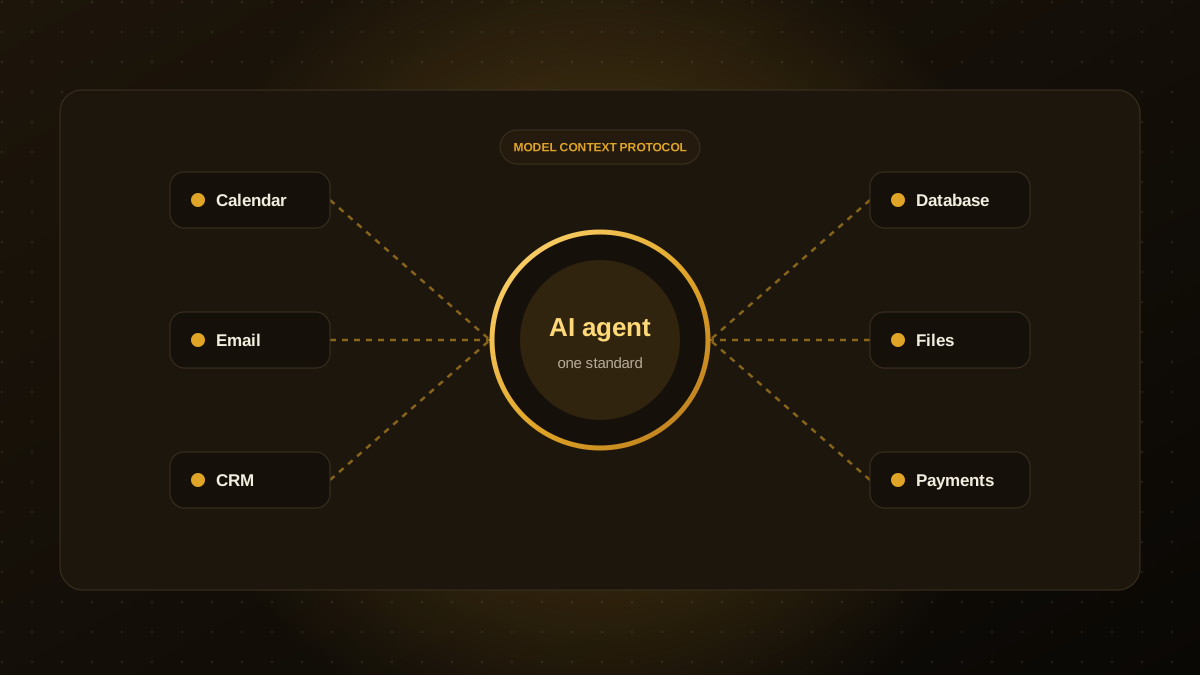
What Is the Model Context Protocol (MCP)? A Guide for Business Leaders
MCP is an open standard that lets AI agents connect to your tools and data in a consistent way. Learn how it works, what it enables and what to check before adopting it.
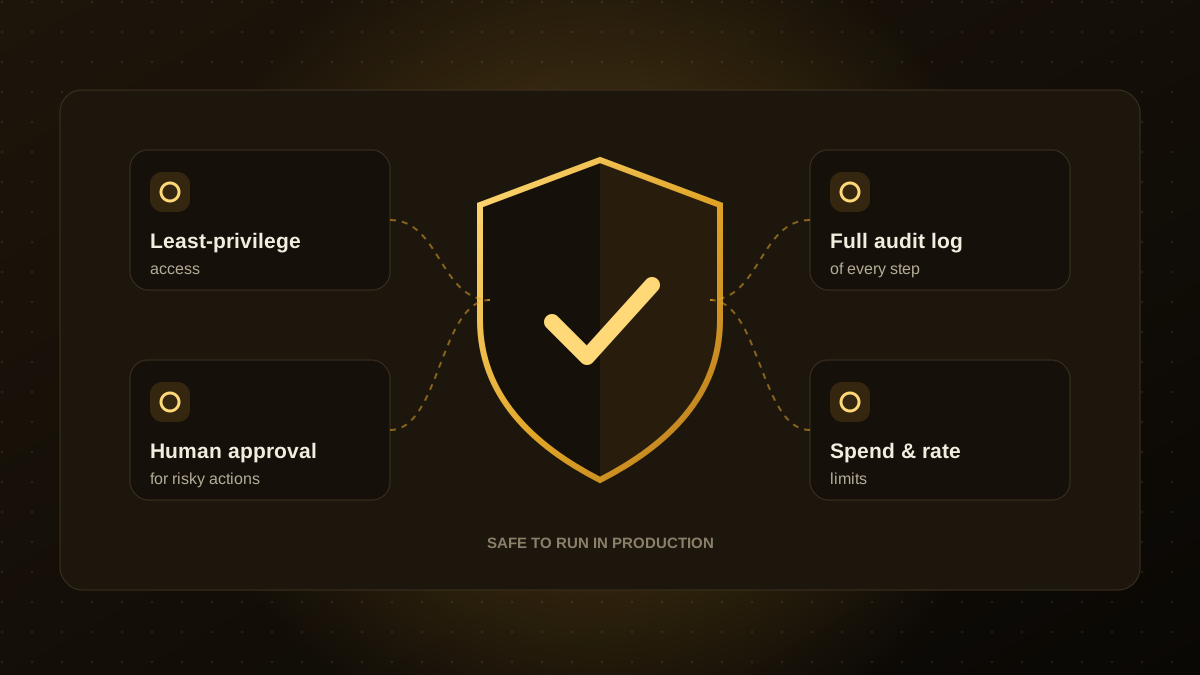
AI Agent Security: 7 Guardrails to Set Before Going to Production
AI agents can take real actions, so they need real controls. Seven guardrails for permissions, approvals, logging, testing and spend limits before you launch.
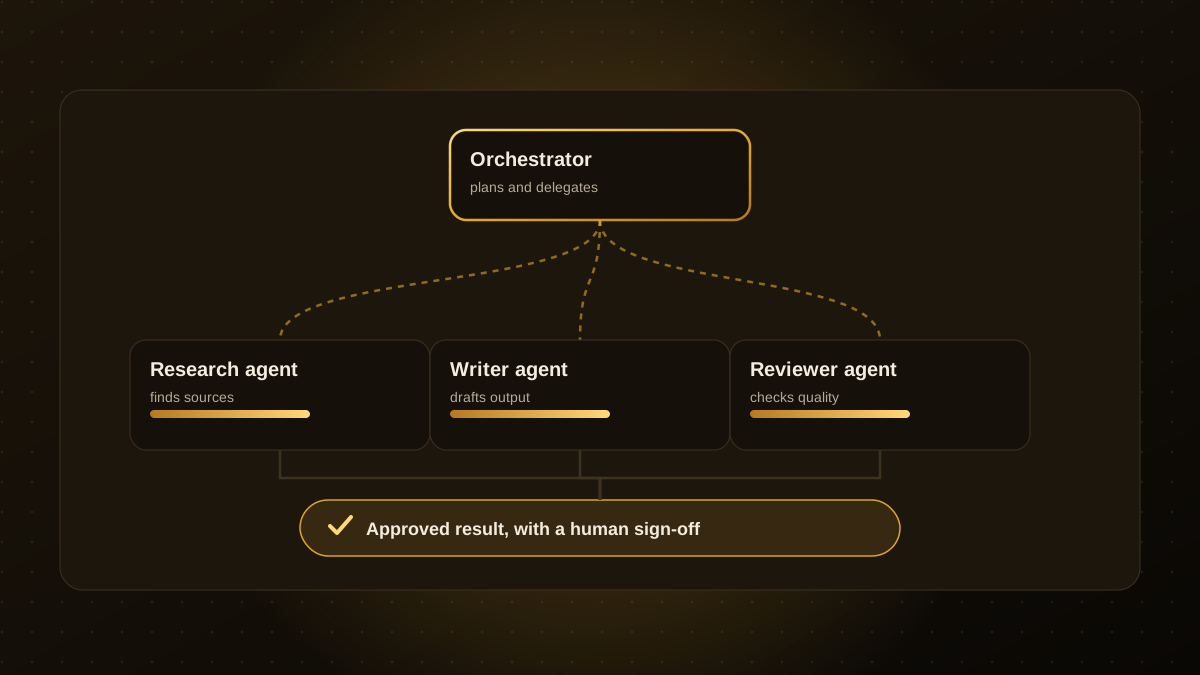
Multi-Agent AI Systems: When One AI Agent Is Not Enough
Multi-agent systems split a complex job between specialised AI agents. See when the approach pays off, when it just adds cost, and how to keep it reliable.