Key takeaways
- The best first AI project is small, frequent, rule-bound and easy to measure, not a grand transformation.
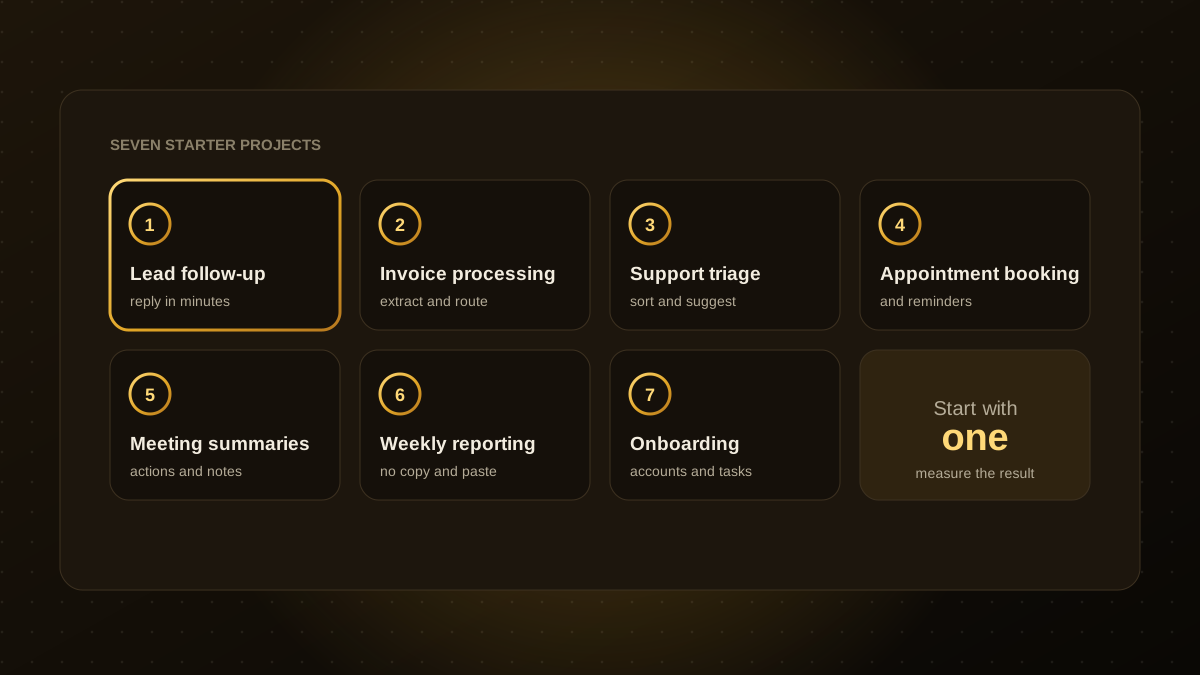
- Good starters include lead follow-up, invoice handling, support triage, booking, meeting summaries, reporting and onboarding.
- Keep a person approving anything customer-facing or financial until the system has earned trust.
- Costs below are indicative ranges. Your real figure depends on your tools, data and how much you want automated.
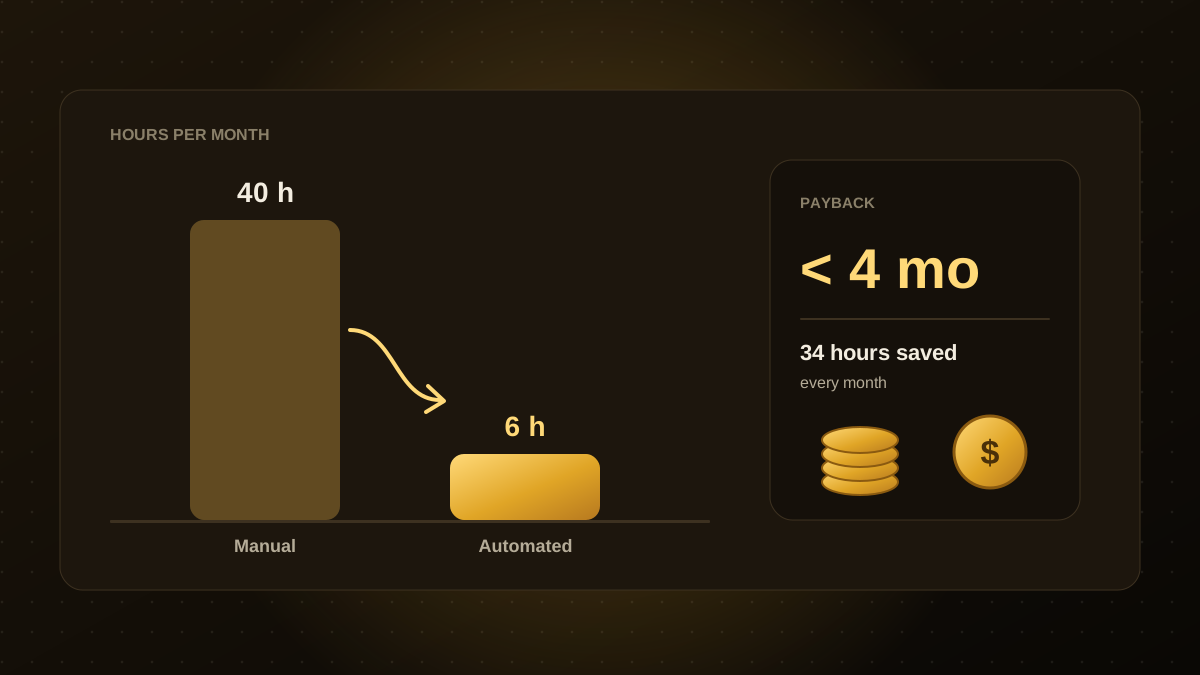
- Pick one project, record the time it takes today, and measure again after 30 days.
How to pick your first project
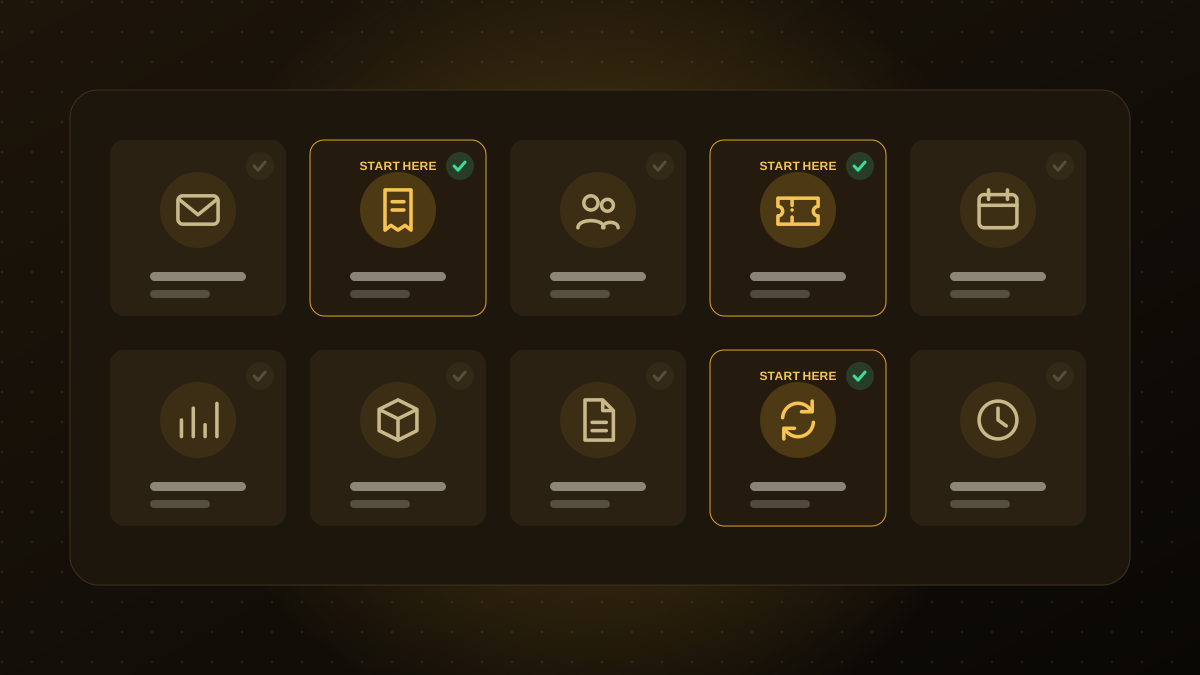
Look for work that is repetitive, happens often, follows fairly clear rules and is annoying enough that people would be glad to hand it over. Avoid starting with anything that needs deep judgement or carries high risk. Our guide to choosing processes to automate first goes deeper. The seven projects below are common first steps, with indicative costs. These are estimates, not quotes.
1. Lead capture and follow-up
New enquiries are logged, acknowledged within minutes and followed up on a schedule, with an AI-drafted reply for a person to approve. Measure: response time and enquiries turned into calls. Risk: tone and accuracy, so keep approval on. Indicative cost: $3k to $8k. See our lead follow-up guide.
2. Invoice and expense processing
AI extracts supplier, dates and totals from invoices, checks for duplicates and routes them for approval into your accounting software. Measure: minutes per invoice and error rate. Risk: payment fraud, so verify changes to bank details. Indicative cost: $5k to $12k. See accounts payable automation.
3. Support triage and suggested replies
Incoming requests are sorted by topic and urgency, and common questions get a drafted answer from your help content. Measure: first response time and the share resolved without escalation. Risk: wrong answers, so ground replies in your documents and cite them. Indicative cost: $8k to $20k.
4. Appointment booking and reminders
Customers book, reschedule and receive reminders automatically, reducing phone tag and no-shows. Measure: no-show rate and hours spent scheduling. Risk: double-booking, so connect to your real calendar. Indicative cost: $3k to $8k.
5. Meeting summaries and action items
Calls are transcribed and summarised, with actions sent to the right people. Measure: time spent writing notes and follow-through on actions. Risk: privacy and consent, so tell participants and check the tool's data terms. Indicative cost: $1k to $4k.
6. Weekly reporting
Numbers from your sales, accounting and marketing tools are collected into one report, with a short written summary. Measure: hours saved each week. Risk: wrong data sources, so reconcile the first few reports by hand. Indicative cost: $3k to $10k.
7. Customer and employee onboarding
When someone joins, accounts are created, documents sent and tasks assigned automatically. Measure: time to get a person fully set up. Risk: access mistakes, so apply least privilege. Indicative cost: $3k to $10k.
Making it work
- Start with an audit. A one-week review ranks your opportunities by return, usually at an indicative $1.5k to $4k.
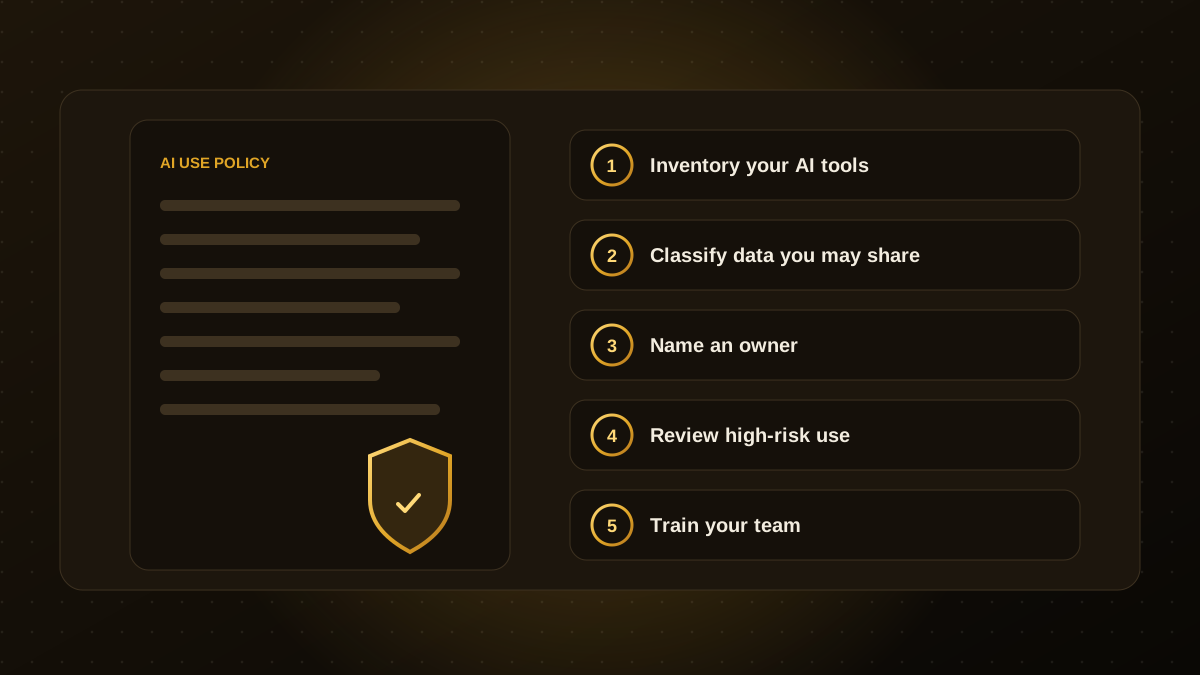
- Keep humans in the loop for anything external or financial, and write a short AI use policy, as described in our governance guide.
- Measure before and after. Use the model in our automation ROI guide.
- Expand from proof. Add the next project once the first has paid back.
If you would like help choosing and building your first one, our AI automation for small business service starts with a short audit.

Qodexify is a remote-first team of senior engineers building web apps, AI agents, workflow automation and websites. Learn more about our AI automation for small business service or talk to an engineer.