
Service
AI Integration Services.
Add reliable AI features to the software you already run: search, summaries, extraction, assistants and agents, with validation, monitoring and cost control built in.
What is AI integration?
AI integration means adding language-model features, such as summarisation, smart search, classification, data extraction and assistants, to an existing product or workflow instead of building something new from scratch. Qodexify designs the feature, connects the model to your data and systems, validates outputs, adds guardrails and monitoring, and controls cost. A typical first feature takes 2–8 weeks and costs roughly $8,000–$40,000.
What’s included
What a production AI feature needs
Use-case selection
We pick the features with clear value and low risk first, and say so honestly when AI is not the right tool.
Reliable outputs
Structured outputs, schema validation and fallbacks so your code can depend on what the model returns.
Your data, safely
Retrieval from your documents and systems, with permissions respected and sensitive data minimised.
Guardrails
Limits, approvals and safe handling of untrusted input for features that take action.
Monitoring and evaluation
Traces, cost tracking and a test set that catches regressions after every change.
Cost and model choice
The right model per task, caching and routing to keep the running cost predictable.
Our approach
How a project runs
Choose the feature
We map your product and workflows and shortlist AI features by value and risk.
Prototype fast
A working prototype on real data shows what is possible and where it fails.
Harden
We add validation, guardrails, evaluation and monitoring and connect production systems.
Launch and tune
Gradual rollout, review of real usage and steady improvement of quality and cost.
Use cases
AI features we integrate
Common projects where this delivers the fastest return.
Smart search and Q&A
Let users ask questions across documents, tickets or products and get cited answers.
Summaries and drafting
Summarise calls, threads and reports, and draft replies for people to approve.
Extraction and classification
Turn emails, invoices and forms into structured data and route them correctly.
In-product assistants
Help users complete tasks inside your app, with permission to act where it is safe.
Recommendations and insights
Surface what matters from your data in plain language.
Agents for back-office work
Automate multi-step tasks with approvals, limits and logging.
Cost & timeline
Typical timeline and budget
Indicative ranges for projects of this kind. Pricing depends on the number of features, data sources, integrations and risk level. Model usage costs are additional.
| Project type | Typical timeline | Typical budget |
|---|---|---|
| Single AI feature pilot | 2–4 weeks | $8k–$20k |
| Production feature with integrations | 4–8 weeks | $15k–$40k |
| Multi-feature AI platform | 8–16 weeks | $40k–$90k |
FAQ
Frequently asked questions
Which AI models do you use?
We choose per task, using leading hosted models or smaller and private models where cost, speed or data control matter. We avoid locking you into one provider.
Will AI make mistakes in our product?
Models can make mistakes, so we design for it: validated outputs, human approval for risky actions, citations, monitoring and a test set that measures quality before and after each change.
What happens to our data?
We minimise what is sent to model providers, respect permissions and can use private or regional deployments for sensitive data. Review each provider's data terms for your plan.
Can you work with our existing codebase?
Yes. We usually add AI features alongside your current stack through APIs and services, and review the code we touch.
How do you control ongoing cost?
We measure cost per feature and user, route simple tasks to smaller models, cache repeated work and set spend limits and alerts.
Do you also build full AI agents?
Yes. See our AI agent development service for features that plan and act across several steps.
From the blog
Guides on this topic
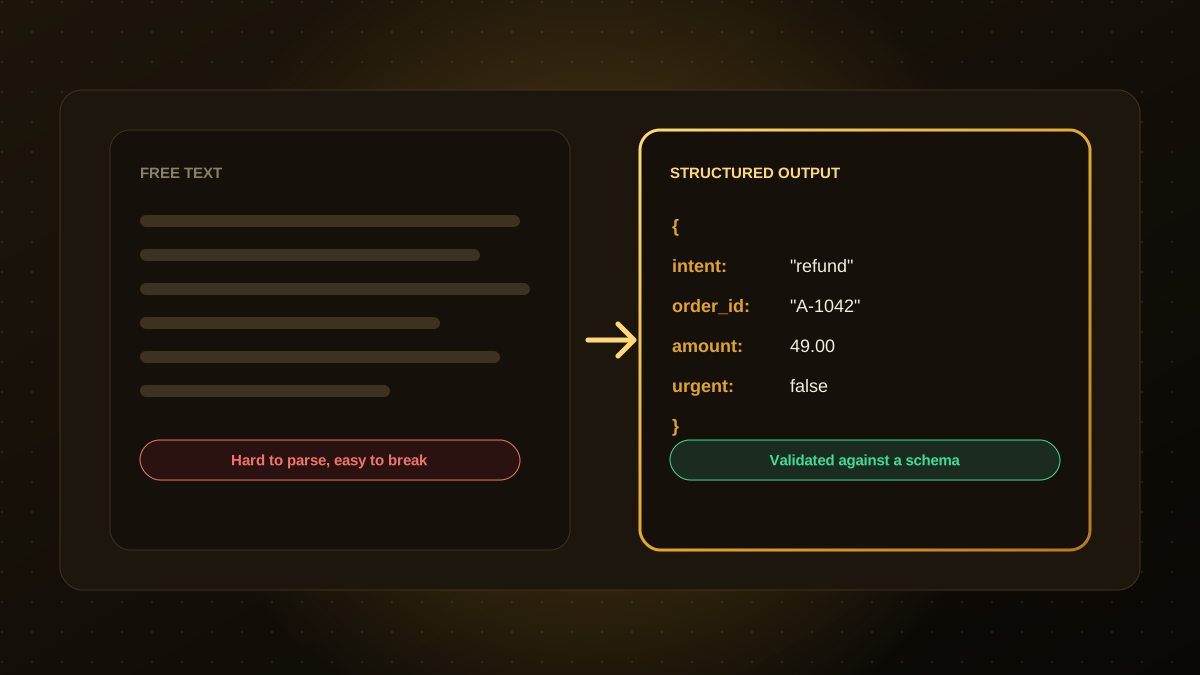
Structured Outputs and Function Calling: Making LLMs Reliable in Real Apps
Free-text AI answers are hard for software to use. Structured outputs and function calling make models return validated data and call your code reliably. Here is how they work.
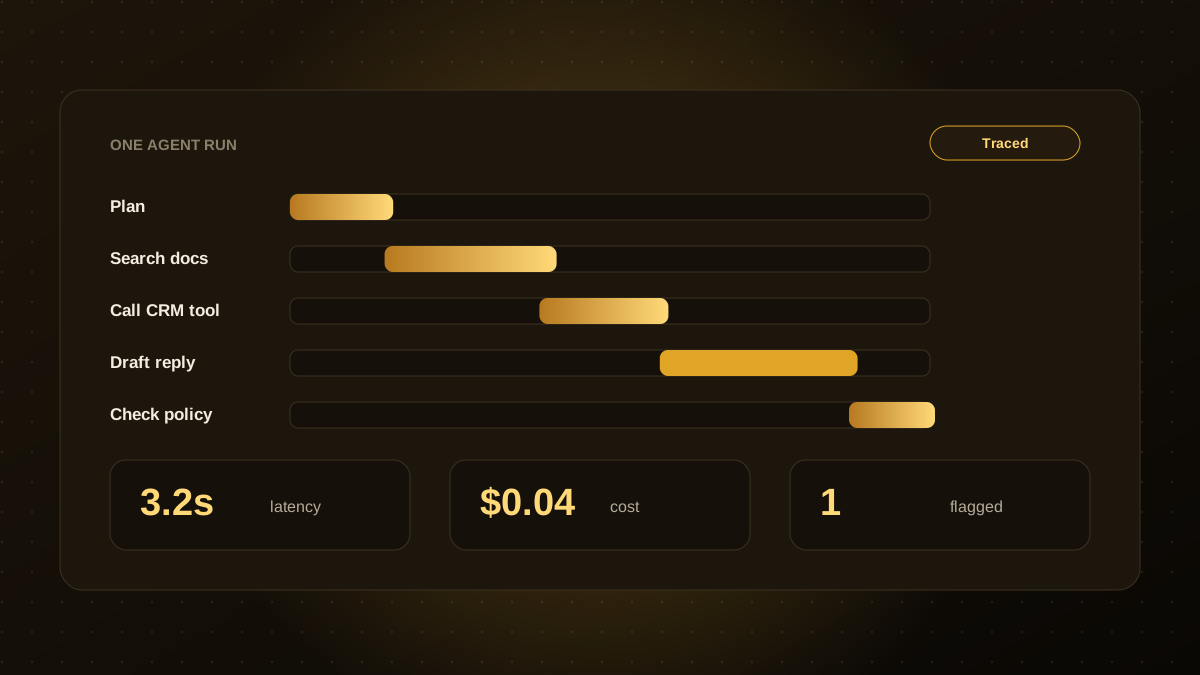
AI Agent Observability: How to Monitor Agents in Production
You cannot fix an AI agent you cannot see. Learn what to log, trace and alert on so you can debug failures, control cost and keep quality high once an agent is live.
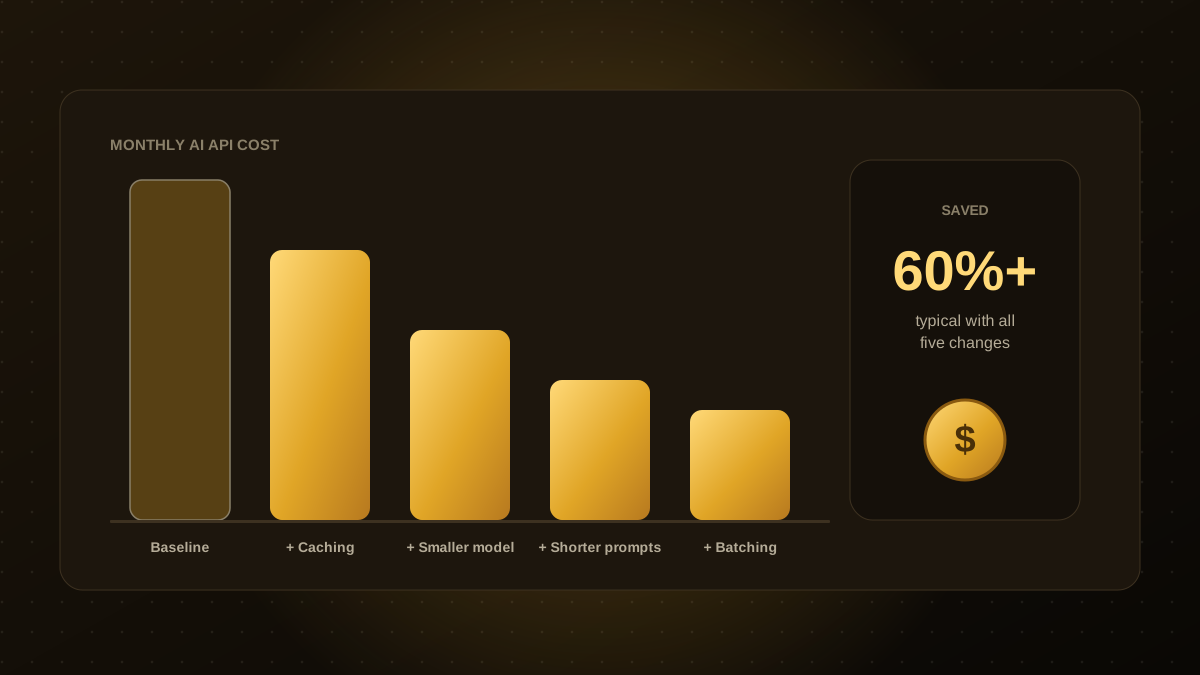
How to Reduce LLM API Costs: 8 Practical Ways to Cut Your AI Bill
AI bills grow quickly once an app has real users. Eight practical ways to lower language model costs without hurting quality: caching, smaller models, shorter prompts and more.