Key takeaways
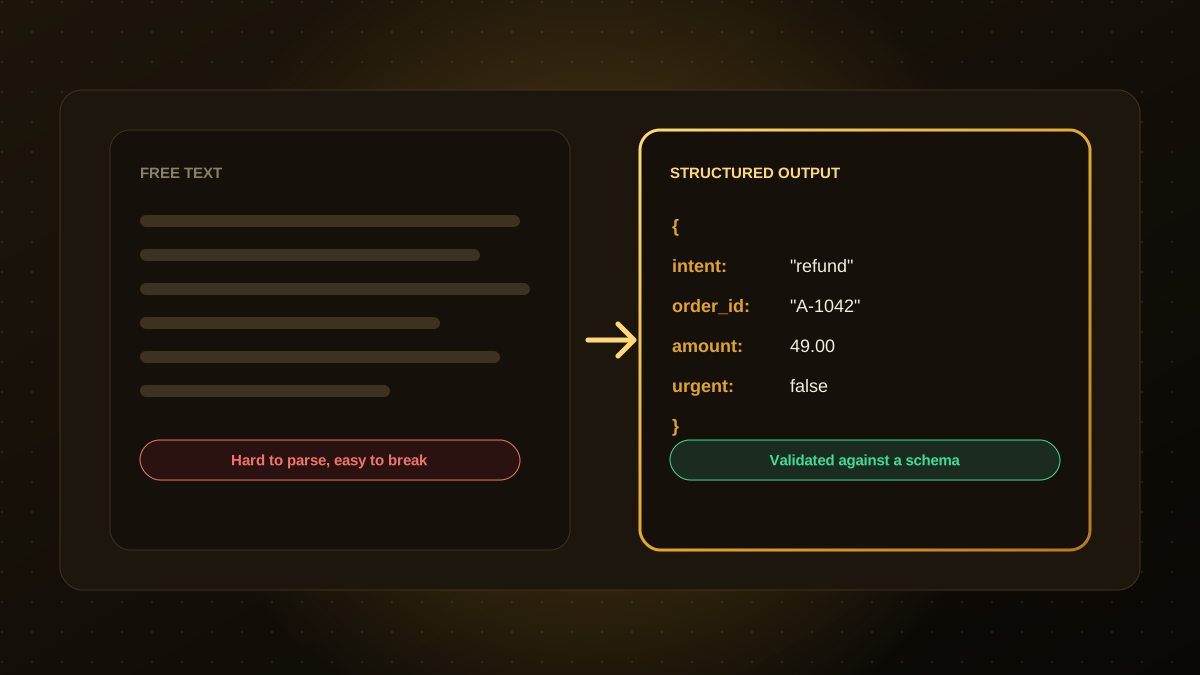
- A model that writes free text is fine for a person but fragile for software. Structured output makes the model return data in a defined format.
- Function calling lets a model request that your code runs a specific function with specific parameters.
- Define a clear schema, validate every response and have a plan for when validation fails.
- Keep schemas small and descriptive. Good field names and descriptions improve accuracy.
- Always treat model output as untrusted input before it touches your systems.
The problem with free text
If you ask a model to extract an order number from an email and it replies "Sure! The order number appears to be A-1042", your code now has to guess where the number is. Small changes in wording break the parser. In real applications that feed results into databases, workflows and other systems, you need predictable data.
Two related techniques
- Structured outputs. You describe the shape of the answer, usually with a JSON schema, and the model returns data that conforms to it: fields, types and allowed values.
- Function calling (tool use). You describe functions your application can run, such as
lookup_order(order_id). The model decides when a function is needed and returns the name and arguments. Your code runs it and passes the result back.
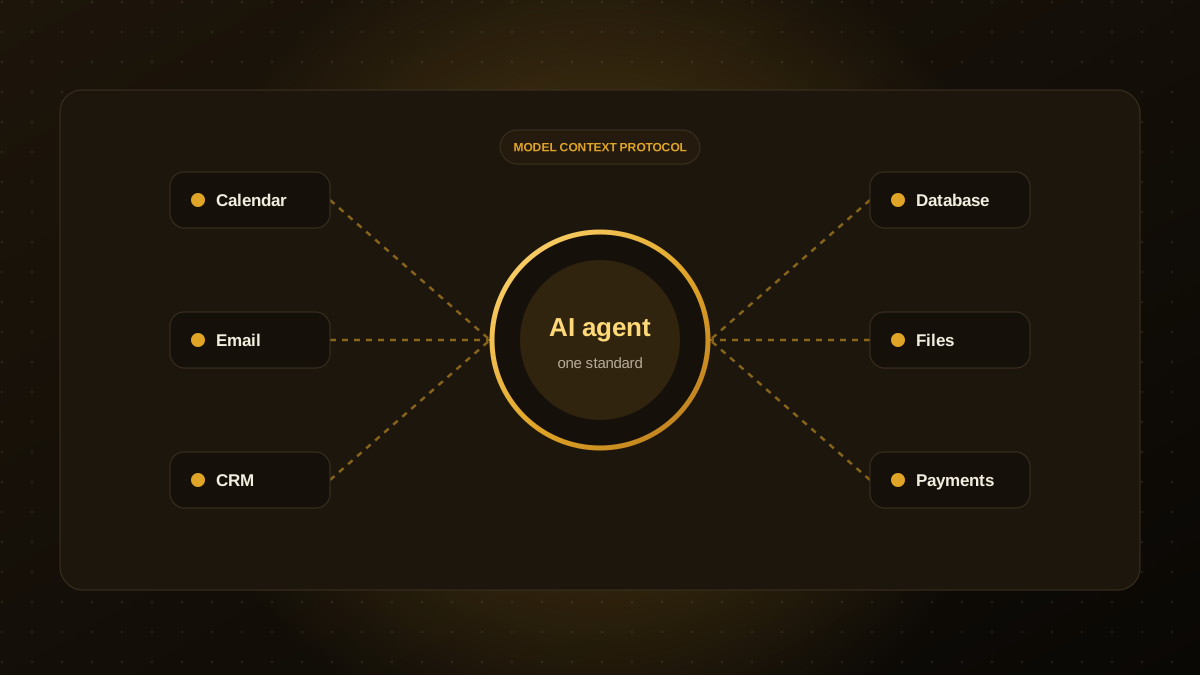
Function calling is the basis of agents that act. Standards such as the Model Context Protocol make tools reusable across AI products.
Designing a good schema
- Keep it small. Ask only for fields you will use.
- Use clear names and short descriptions. The model reads them as instructions.
- Constrain values. Use enumerations for categories, such as
refund,exchangeorother. - Allow "unknown". Let the model say a field is missing rather than inventing a value.
- Version your schemas so changes do not silently break consumers.
Validate everything
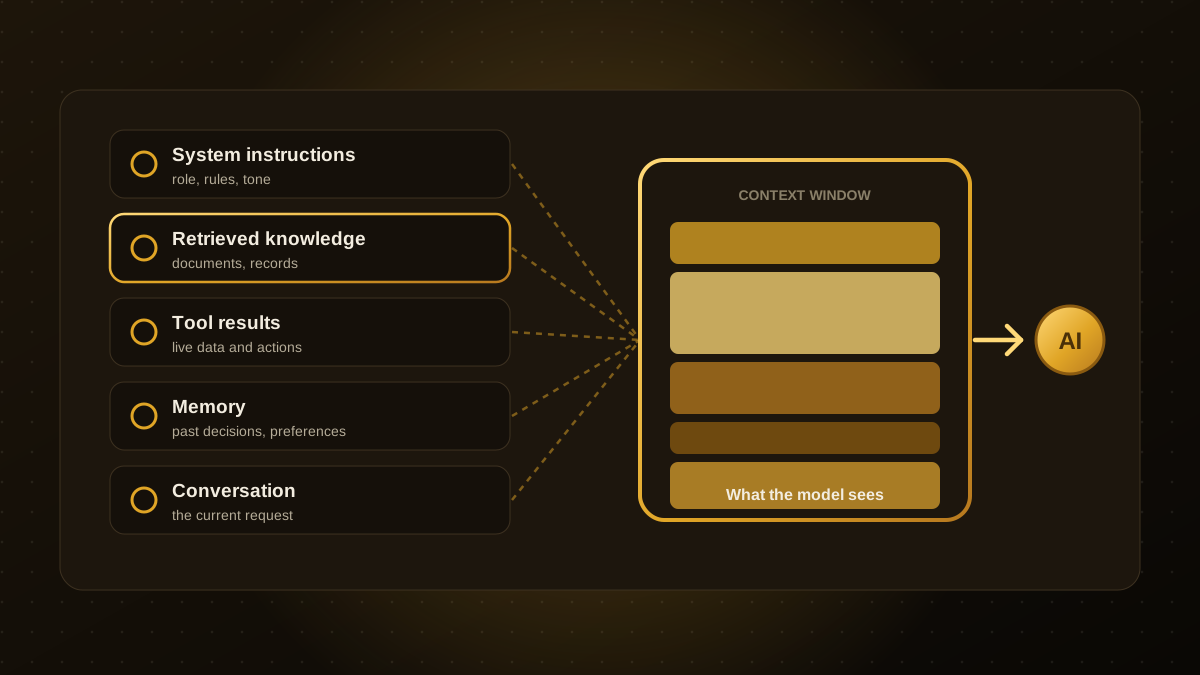
Even with schema support, check the response before using it: types, ranges, formats and business rules. For example, an order ID must exist, a refund amount must not exceed the order total and a date must be in the future. If validation fails, retry once with the error message, then fall back to a safe default or a human. Never execute commands or queries built directly from model output without checks, a point we stress in our context engineering and guardrails guides.
Where it pays off
| Use case | Structured output example |
|---|---|
| Email and ticket triage | Category, priority, customer, requested action |
| Document extraction | Invoice number, dates, line items, totals |
| Lead qualification | Company size, need, urgency, next step |
| Agent actions | Tool name and validated parameters |
Test it like any other interface
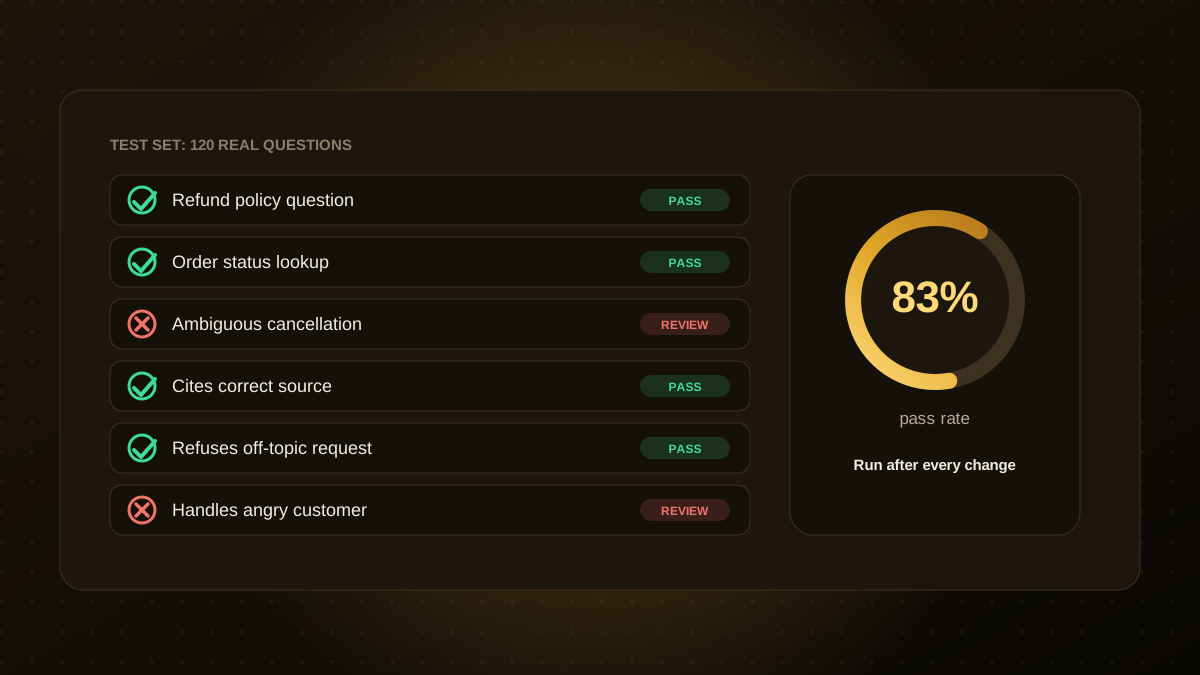
A schema is a contract. Test it with a set of realistic inputs, including messy and adversarial ones, as described in our guide to evaluating AI agents. If you want help turning a prototype into a reliable feature, our AI integration team builds and tests these pipelines.

Qodexify is a remote-first team of senior engineers building web apps, AI agents, workflow automation and websites. Learn more about our AI integration service or talk to an engineer.