
Service
Legacy System Modernization.
Move from ageing software to a modern, maintainable stack in safe stages, with no big-bang rewrite and no downtime for your customers.
What is legacy modernization?
Legacy modernization is the process of updating or replacing old software that is hard to change, risky to run or no longer supported. Qodexify uses a staged approach, often called the strangler fig pattern: we assess the system, wrap it with an API layer and replace it one module at a time while the business keeps running. An assessment takes 1–2 weeks, and the first migrated module typically takes 6–12 weeks.
What’s included
What the engagement includes
Assessment and mapping
We document what the system does, its data, integrations and risks, and what users really depend on.
Staged migration plan
A sequence of small, reversible steps, each delivering value, instead of one risky switch-over.
API layer and routing
A facade in front of the old system so functions can move to new code gradually.
Modern replacement modules
New components built with current tools, automated tests and clear documentation.
Data migration and checks
Careful data moves with parallel runs and reconciliation so nothing is lost.
Cutover and retirement
Controlled traffic shifts, rollback plans and safe retirement of the old parts.
Our approach
How a project runs
Assess (1–2 weeks)
Map the system, its risks and its business value, and agree priorities.
Plan the slices
Choose the first module and design the routing layer and data approach.
Build and prove
Build the new module, run it alongside the old one and compare results.
Switch and repeat
Move traffic gradually, retire the old part and continue with the next slice.
Use cases
Typical modernization projects
Common projects where this delivers the fastest return.
Old PHP, .NET or Java applications
Move to a supported, maintainable stack without freezing the business.
Spreadsheet and Access-based systems
Replace fragile files with a proper web application and database.
Unsupported platforms and frameworks
Reduce security risk from software that no longer receives updates.
Monoliths that are hard to change
Extract the parts that change most into independent services.
On-premise software moving to the cloud
Move to managed infrastructure with better reliability and backups.
Systems with no documentation
Recover knowledge, add tests and make the system understandable again.
Cost & timeline
Typical timeline and budget
Indicative ranges for projects of this kind. Pricing depends on system size, documentation, integrations and risk. Large programmes are scoped after the assessment.
| Project type | Typical timeline | Typical budget |
|---|---|---|
| Assessment and roadmap | 1–2 weeks | $3k–$8k |
| First migrated module | 6–12 weeks | $25k–$60k |
| Full modernization programme | 6–18 months | $100k+ |
FAQ
Frequently asked questions
Why not just rewrite everything?
Big-bang rewrites often run late, miss undocumented business rules and deliver no value until the end. Staged migration delivers value and reduces risk at every step.
Will our business be disrupted?
The aim is no downtime. We run old and new in parallel, switch a small share of traffic first and keep a rollback ready.
Do you need our original developers?
It helps, but it is not essential. We recover knowledge from the code, data and the people who use the system.
Is it better to replace the system with a product?
Sometimes. If a good off-the-shelf product fits, replacing may be cheaper. We will tell you honestly, as discussed in our build versus buy guide.
What about our data?
We plan data migration early, test it in parallel and reconcile the results before cutting over.
How do you reduce technical debt at the same time?
We add tests, remove dead code and improve structure as we migrate, so the new system does not inherit the old problems.
From the blog
Guides on this topic
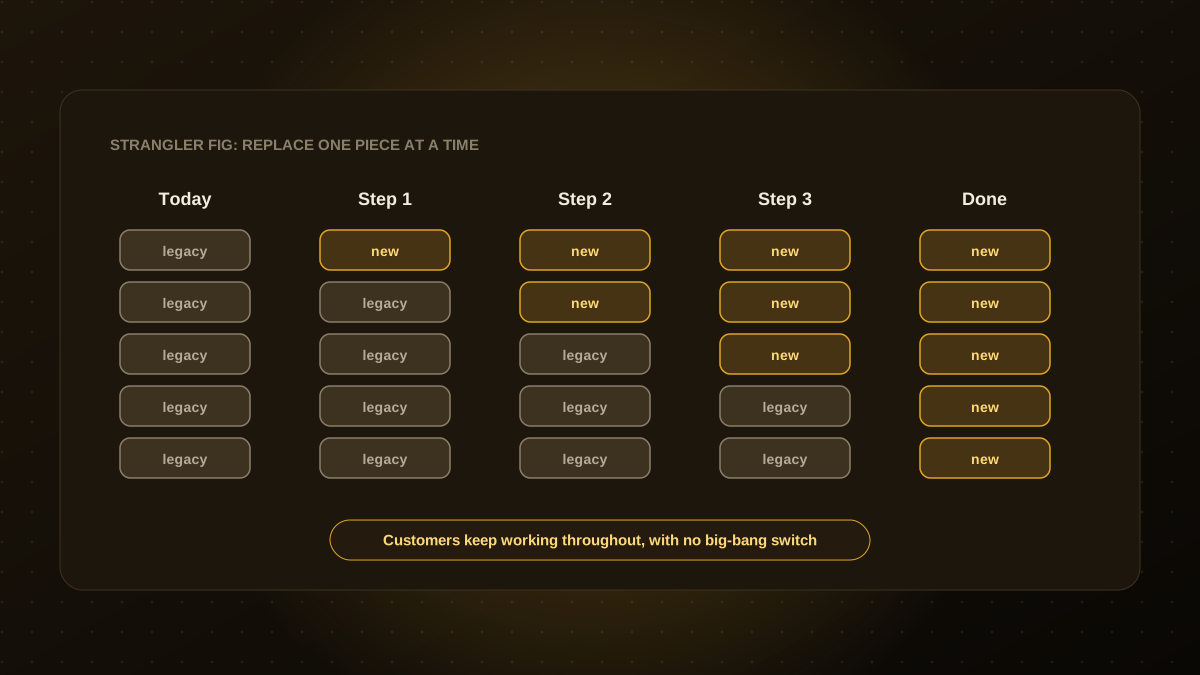
Legacy System Modernization: The Strangler Fig Approach, Step by Step
Rewriting an old system in one go is risky. The strangler fig approach replaces it piece by piece while the business keeps running. Here is how it works and how to start.
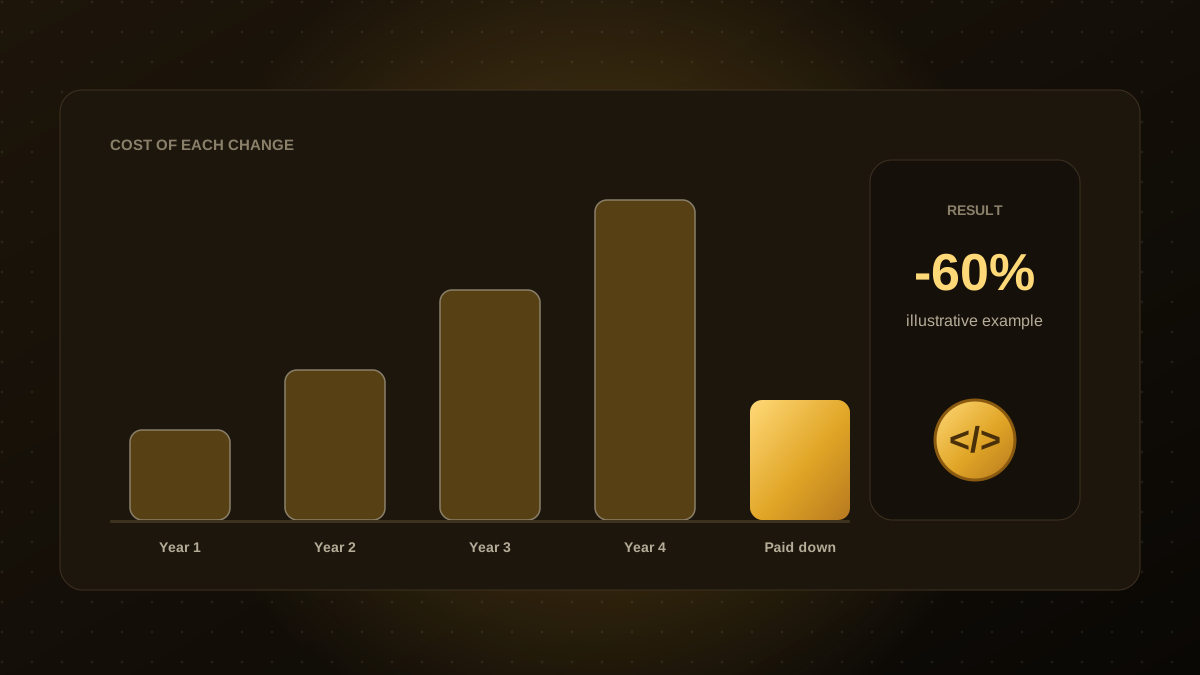
Technical Debt: How to Measure It, Prioritise It and Pay It Down
Technical debt slows every release and raises risk. Learn how to spot it, put a business cost on it, decide what to fix first and pay it down without stopping delivery.
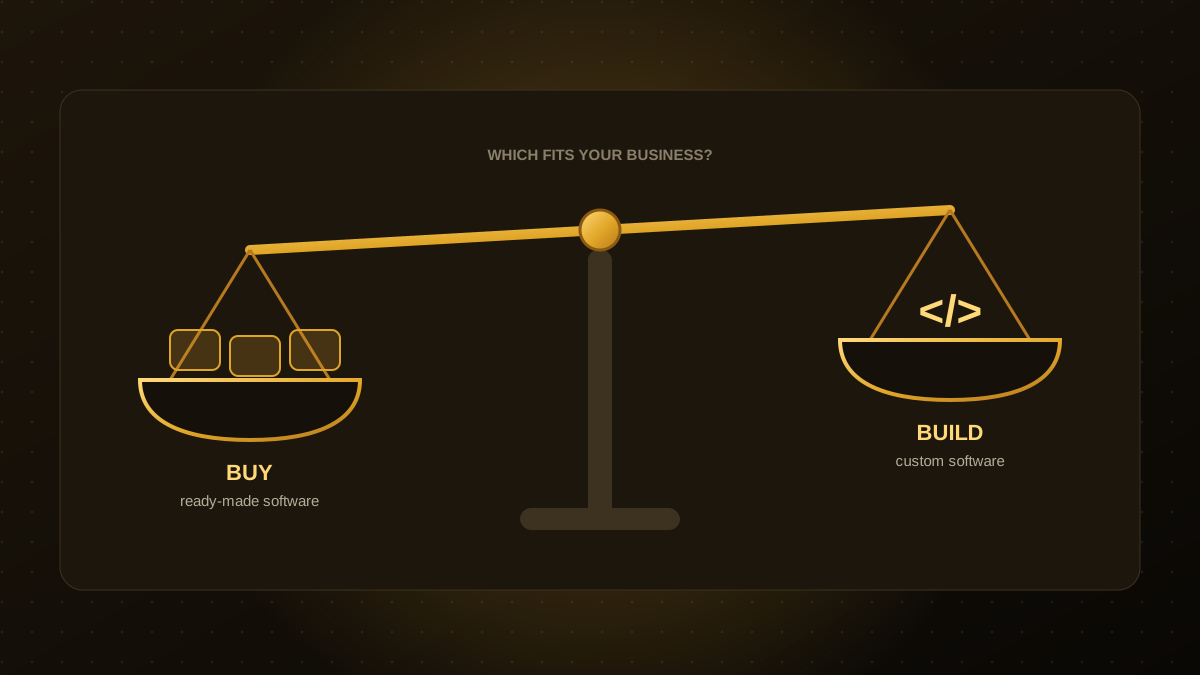
Build vs. Buy Software: How to Decide What Is Right for Your Business
Should you build custom software or buy an existing product? A practical framework covering cost, fit, speed, risk and long-term ownership to help you decide.