
Service
Website Maintenance & Security.
Patching, backups, monitoring and fixes handled for you, so your website stays fast, up to date and protected, and you hear about problems before your customers do.
What does website maintenance and security include?
Website maintenance is the ongoing work that keeps a site secure, fast and working: applying software and security updates, monitoring uptime, taking and testing backups, fixing bugs and tuning performance. Critical flaws, such as the PHP vulnerabilities patched in October 2026, make quick patching essential. Qodexify offers monthly plans from roughly $200–$4,000 per month depending on the size and risk of your site.
What’s included
What your plan covers
Patching and updates
Server runtime, CMS, plugins and dependencies kept current, with critical fixes applied quickly.
Backups you can restore
Automated off-site backups with regular restore tests, because an untested backup is a hope, not a plan.
Uptime and performance monitoring
Alerts for downtime, errors and slow pages, tracked against Core Web Vitals targets.
Security hardening
Access reviews, multi-factor authentication, firewall rules, malware scanning and secure configuration.
Fixes and small changes
Bug fixes and small content or design updates handled within your plan.
Reporting and incident response
A monthly summary of what changed, plus a clear plan and contact if something goes wrong.
Our approach
How a project runs
Audit
We review your hosting, software versions, access and backups and list the risks.
Stabilise
We fix urgent issues first: outdated software, weak access, missing backups.
Monitor
We set up monitoring, alerting and a regular update schedule.
Maintain and report
Ongoing care with a monthly report and a simple way to request changes.
Use cases
Who this is for
Common projects where this delivers the fastest return.
WordPress and PHP sites
Platforms that need frequent updates and where unpatched flaws are a common attack route.
E-commerce stores
Sites where downtime and security problems cost sales directly.
Marketing and brochure sites
Business sites that must stay online without needing a full-time developer.
Web apps and portals
Custom applications that need patching, monitoring and dependable support.
Sites after a redesign
Keep your new site fast and your rankings protected after launch.
Sites that were built and forgotten
Old sites with unknown risks that need an honest review.
Cost & timeline
Typical plans and budgets
Indicative monthly ranges. The final price depends on platform, traffic, number of sites and response-time requirements.
| Project type | Typical timeline | Typical budget |
|---|---|---|
| Essential care: updates, backups, uptime monitoring | 1 week onboarding | $200–$500 / month |
| Business care: plus security, performance and small changes | 1–2 weeks onboarding | $500–$1,500 / month |
| Critical site: plus priority response and security reviews | 2–3 weeks onboarding | $1,500–$4,000 / month |
FAQ
Frequently asked questions
Why do websites need maintenance?
Software ages, new vulnerabilities are found and plugins change. Without regular updates, sites become slow, break or get compromised.
Do you work on sites you did not build?
Yes. We start with an audit of what is there and tell you plainly what needs fixing first.
What happens if my site is hacked?
We isolate the site, find how they got in, restore from a clean backup, remove the weakness and rotate credentials. Plans include a response procedure.
How fast do you apply critical security updates?
We target days, not weeks, for critical fixes, after testing them where it is practical.
Can I cancel?
Yes. Maintenance plans run month to month, and we provide documentation so you can hand the site to another team.
Does this guarantee my site cannot be attacked?
No one can promise that. Maintenance and hardening greatly reduce risk and make recovery faster.
From the blog
Guides on this topic
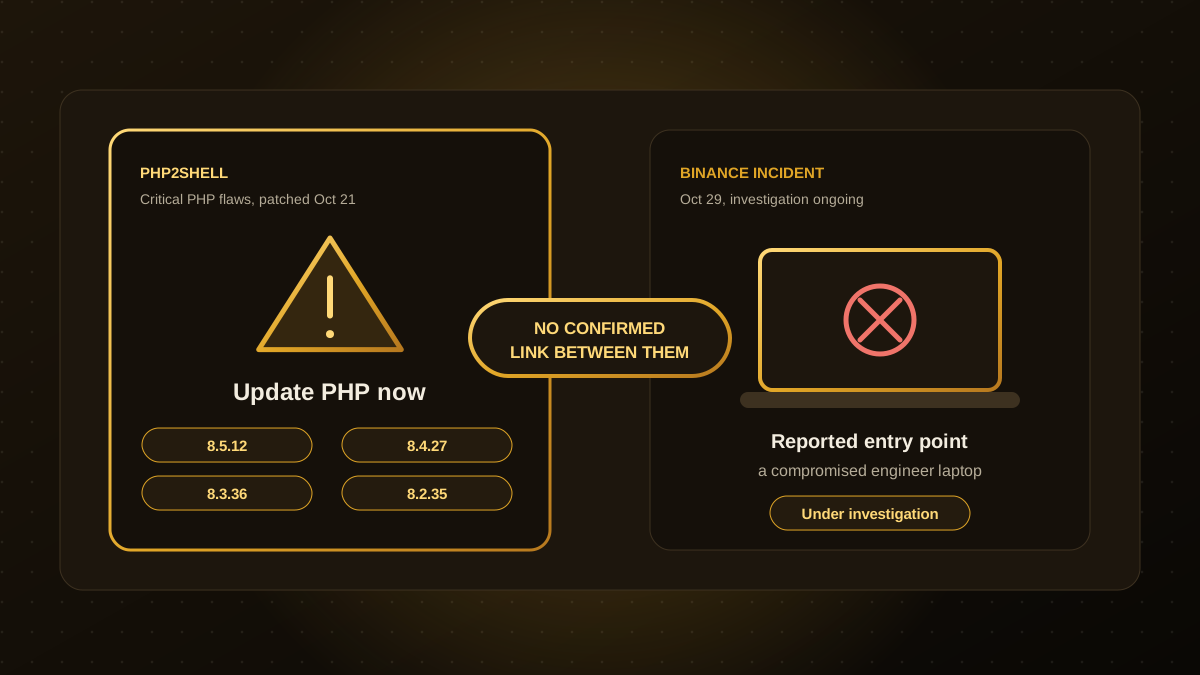
PHP2Shell and the Binance Hack: What Happened and What Your Business Should Do Now
Two serious security events hit in October 2026: critical PHP flaws and a major Binance incident. Here is what is confirmed, what is not, and a practical checklist for your own systems.
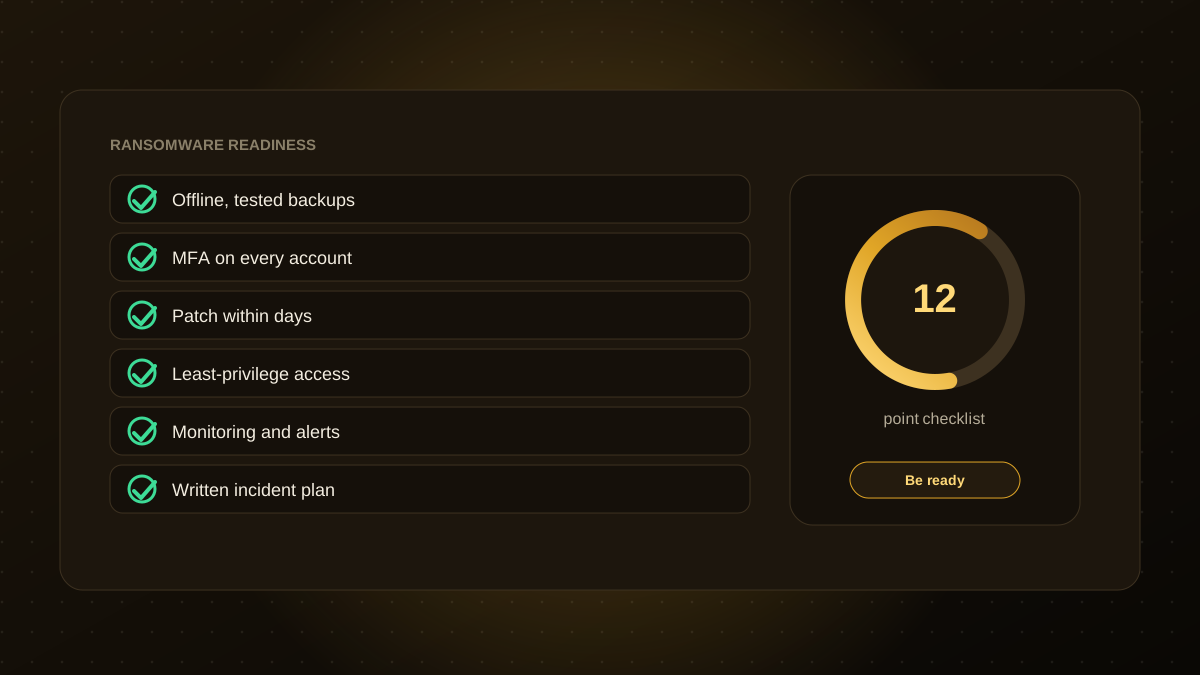
Ransomware Readiness: A 12-Point Checklist for Small Businesses
Ransomware can stop a small business for weeks. This 12-point checklist covers backups, multi-factor authentication, patching, access control, monitoring and your response plan.
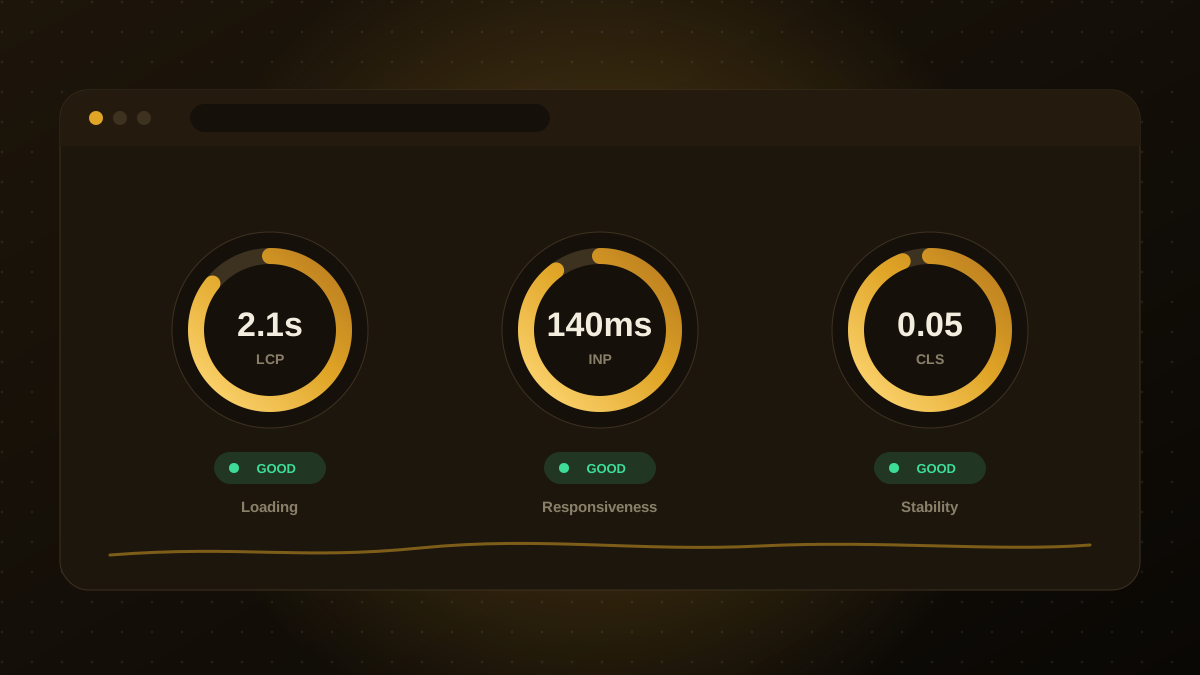
Core Web Vitals Checklist: How to Improve Website Speed and SEO
A practical checklist for LCP, INP and CLS: the targets to hit, the fixes that matter most, and the tools to measure them.