
Service
AI Voice Agent Development.
Phone agents that sound natural, book into your calendar, update your CRM and pass complex calls to your team, so you never miss a call.
What is an AI voice agent?
An AI voice agent answers or makes phone calls and holds a natural spoken conversation. It converts speech to text, uses a language model to decide what to say and do, and replies in a natural voice, while taking actions such as booking an appointment or updating a record. Qodexify builds voice agents with calendar and CRM integration, human handoff and compliance controls. A typical pilot takes 3–8 weeks and costs roughly $12,000–$45,000.
What’s included
What a production voice agent includes
Call flow design
Scripts, intents and fallbacks designed around how your callers actually speak.
Telephony and speech
Phone numbers, SIP and number porting, speech recognition and natural voices, tuned for low latency.
Calendar and CRM integration
Check real availability, book, reschedule and log call summaries in your systems.
Human handoff
Warm transfer to a person with a summary, for complaints, complex cases and anything high-stakes.
Compliance and consent
AI disclosure, recording consent and data handling that follow the rules where you operate.
Call analytics
Transcripts, outcomes and quality scoring, so you can see what works and improve it.
Our approach
How a ai voice agent development project runs
Pick the calls
We review call recordings and choose the highest-volume, repeatable call types.
Design the conversation
We design flows, voice and handoff rules, and connect your calendar and CRM.
Test with real audio
We test with real recordings, accents and noisy lines, and tune for latency.
Pilot and improve
We start with a share of calls, review transcripts weekly and expand.
Use cases
Voice agent use cases
Common projects where this service delivers the fastest return.
Appointment booking
Book, confirm and reschedule for clinics, salons, trades and services.
After-hours and overflow
Answer every call when your team is busy or closed.
Order and account status
Look up orders or accounts and answer common questions.
Lead qualification
Ask standard questions and pass warm leads to sales with a summary.
Reminders and follow-ups
Confirm appointments and chase outstanding items, where permitted.
Virtual receptionist
Greet, route and take messages with a natural conversation.
Cost & timeline
Typical timeline and budget
Indicative ranges for projects of this kind. Running costs per minute for speech, language models and telephony are additional. Pricing depends on integrations, languages and call volume.
| Project type | Typical timeline | Typical budget |
|---|---|---|
| Pilot for one call type | 3–5 weeks | $12k–$25k |
| Multi-flow agent with CRM and calendar integration | 6–8 weeks | $25k–$45k |
| Multi-language, high-volume deployment | 8–12 weeks | $40k–$80k |
FAQ
Frequently asked questions
Will callers know they are talking to an AI?
We recommend disclosing it at the start of the call, which is also a legal requirement in some places. Good voice agents are natural and quick, and callers are generally comfortable when the experience is helpful.
What happens when the agent cannot help?
It transfers to a person, or takes a message, with a summary of the conversation so the caller does not have to repeat themselves.
How fast does it respond?
Latency is a key quality factor. We design for quick turn-taking and test on real calls, since long pauses frustrate callers.
Can it integrate with our calendar and CRM?
Yes. Typical integrations include Google Calendar, Outlook, Calendly, HubSpot, Salesforce and custom booking systems.
Is call recording allowed?
Rules differ by country and by type of call. We build in disclosure and consent steps and configure retention, but you should confirm requirements for your market.
How much does it cost to run?
Besides the build, you pay per minute of conversation for speech, the language model and telephony. We estimate this up front using your call volumes.
From the blog
Guides on this topic
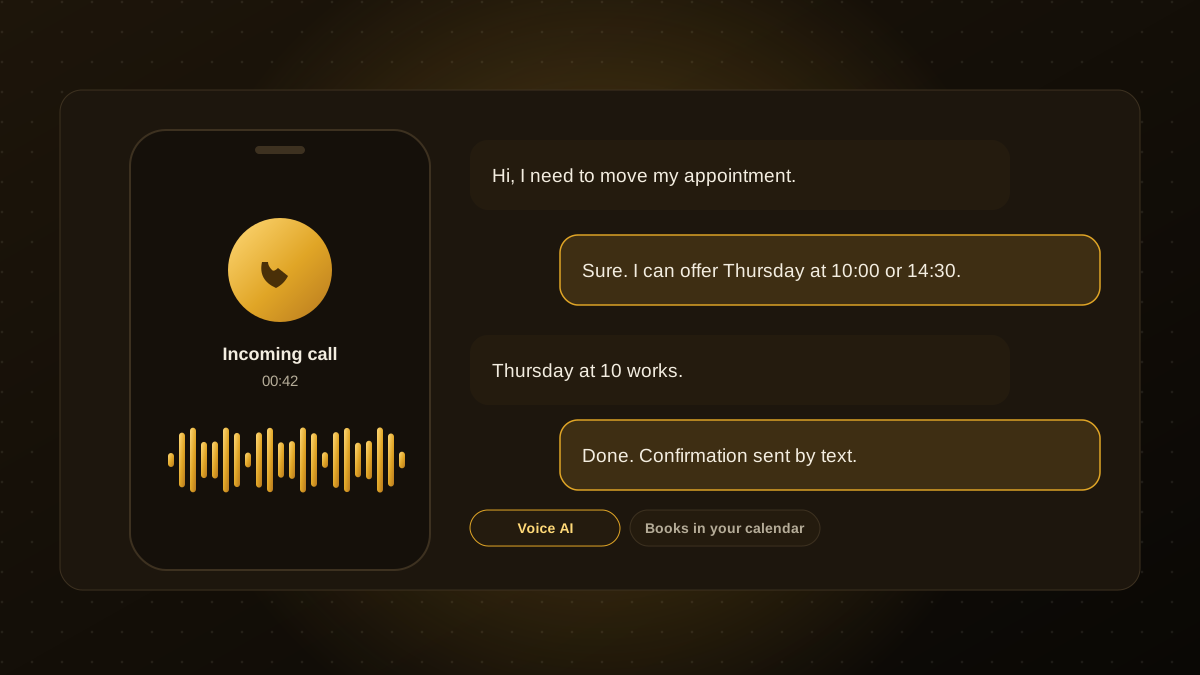
AI Voice Agents for Business: Use Cases, Costs and Pitfalls
AI voice agents can answer calls, book appointments and qualify leads around the clock. Learn where they work well, what they cost to run and how to avoid frustrating callers.
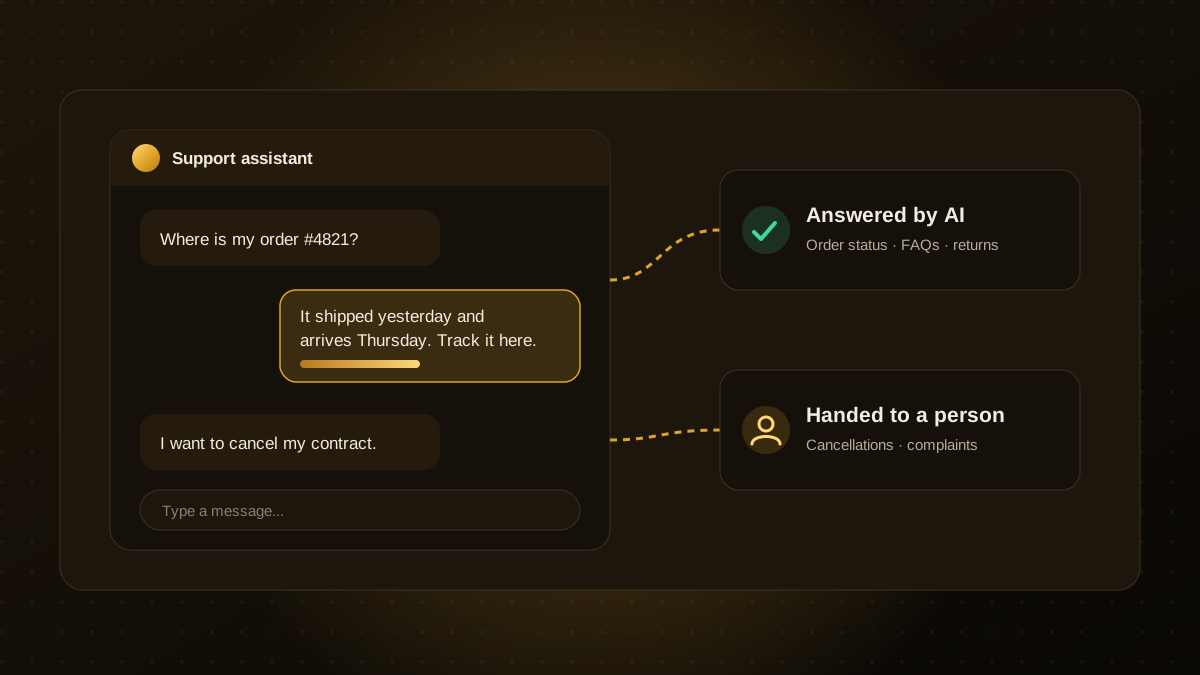
How to Use AI for Customer Support Without Hurting the Customer Experience
A practical guide to AI customer support: what to automate, what to keep human, how to ground answers in your knowledge base and how to measure whether it works.
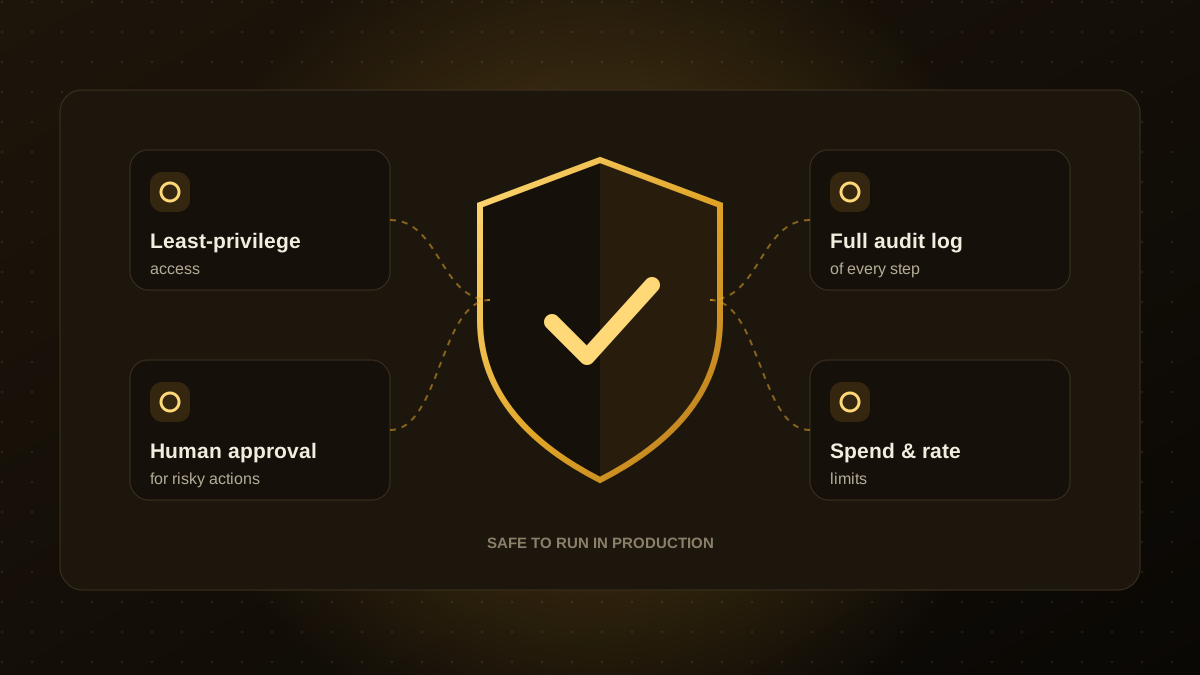
AI Agent Security: 7 Guardrails to Set Before Going to Production
AI agents can take real actions, so they need real controls. Seven guardrails for permissions, approvals, logging, testing and spend limits before you launch.