
Industry
Logistics & Supply Chain Software.
Customer tracking portals, document automation and operations tools for freight, warehousing and supply chain teams that run on tight margins and tight deadlines.
How does Qodexify help logistics companies?
Logistics runs on documents, handovers and timing: proofs of delivery, invoices, customs paperwork, status updates and exceptions. Qodexify builds tracking and customer portals, automation for document processing, dispatch and operations tools and AI assistants that answer where is my shipment questions. A document automation takes 3–8 weeks; an operations platform takes 12–20 weeks.
What’s included
What we build for logistics teams
Tracking and customer portals
Self-service status, documents and invoices, so customers stop calling for updates.
Document automation
Extract data from delivery notes, bills of lading and invoices and route exceptions to people.
System integrations
Connect TMS, WMS, carriers, accounting and customer systems so data is entered once.
Dispatch and operations tools
Planning boards, driver and warehouse apps and live exception dashboards.
AI assistants for status and quotes
Answer shipment questions and draft quotes from your rate rules, with staff in control.
Alerts and exception handling
Notifications for delays, missing documents and SLA risks before customers notice.
Our approach
How a project runs
Follow a shipment
We trace one shipment end to end to find delays, rework and data gaps.
Prioritise
We pick the automation or portal with the clearest payback.
Build and integrate
We build against your real systems and test with live data.
Monitor and extend
We track exceptions and savings, then extend to the next process.
Use cases
Typical logistics projects
Common projects where this delivers the fastest return.
Shipment tracking portal
Give customers live status and documents.
Proof-of-delivery and invoice processing
Capture, match and bill faster.
Customs and compliance paperwork
Collect and check documents before they cause delays.
Quote and rate automation
Turn requests into accurate quotes in minutes.
Driver and warehouse mobile tools
Capture scans, photos and signatures reliably.
Operations dashboards
See capacity, delays and costs in one place.
Cost & timeline
Typical projects, timelines and budgets
Indicative ranges for projects of this kind. Pricing depends on integrations, data quality and number of users.
| Project type | Typical timeline | Typical budget |
|---|---|---|
| Document and invoice automation | 3–8 weeks | $10k–$30k |
| Tracking and customer portal | 6–10 weeks | $20k–$45k |
| Dispatch and operations platform | 12–20 weeks | $50k–$110k |
FAQ
Frequently asked questions
Can you integrate with our TMS or WMS?
Often yes, depending on available APIs or exports. We assess integration options in discovery and build connectors where needed.
Can AI read our shipping documents?
Yes. Modern AI extracts data from varied document layouts. We validate results and send low-confidence items to a person.
Will it work with drivers and warehouse staff on mobile?
Yes. We build mobile-friendly or app-based tools for scanning, photos and signatures.
How do you handle real-time updates?
We use event-based updates and notifications from your systems and carriers where available.
What is the typical payback?
It depends on volume. We estimate it with you using a simple model, as in our automation ROI guide.
Can you replace our legacy dispatch system gradually?
Yes, using a staged approach that keeps operations running.
From the blog
Guides on this topic
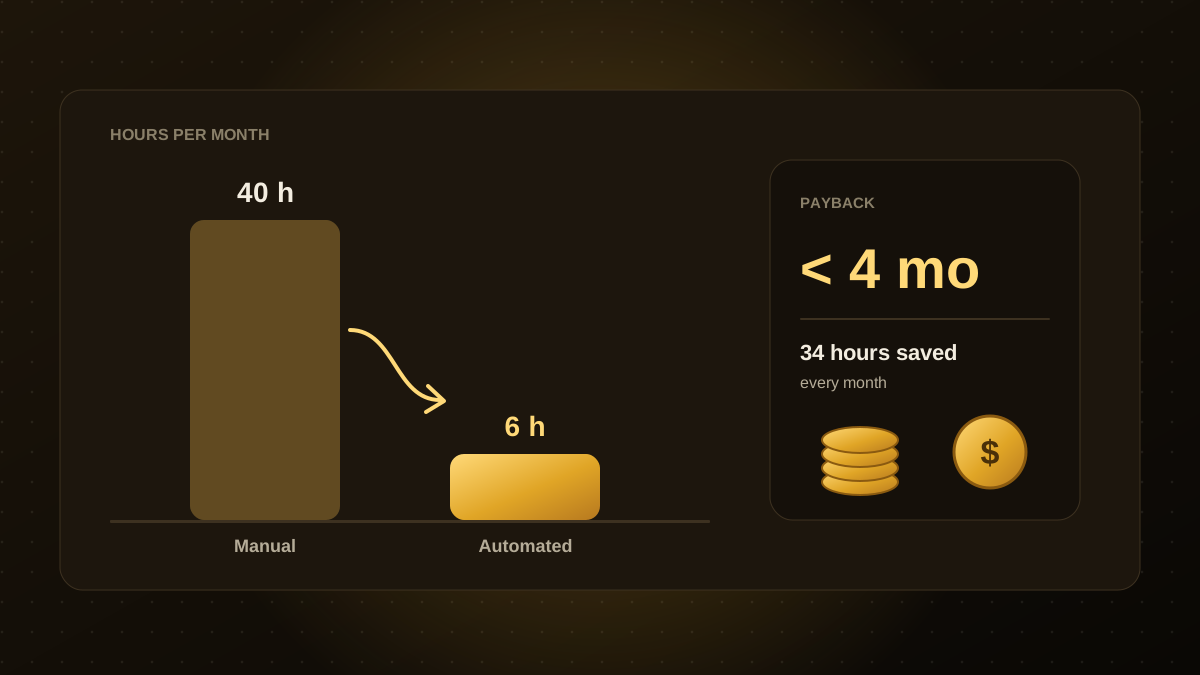
How to Calculate the ROI of Workflow Automation (With a Worked Example)
A simple formula for automation ROI: measure the manual cost, estimate build and run costs, and calculate payback. Includes a worked example and common mistakes.
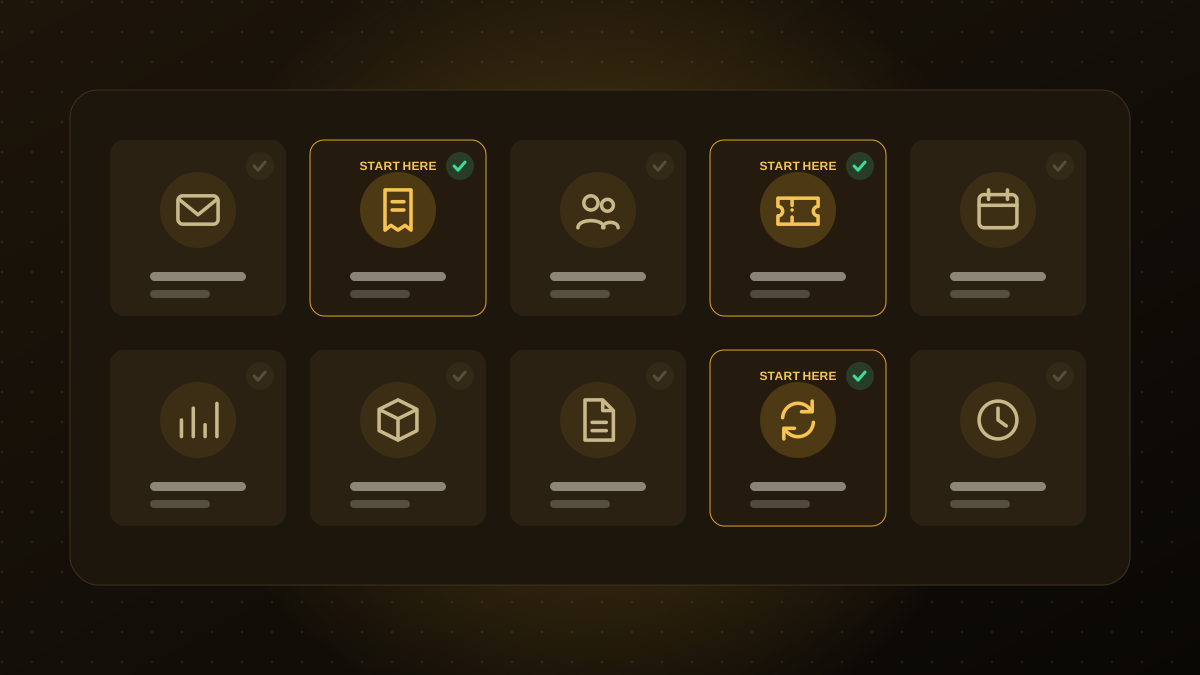
10 Business Processes to Automate First (and How to Prioritize)
Ten repetitive processes that usually pay back quickly, and a simple scoring method to decide which to automate first.
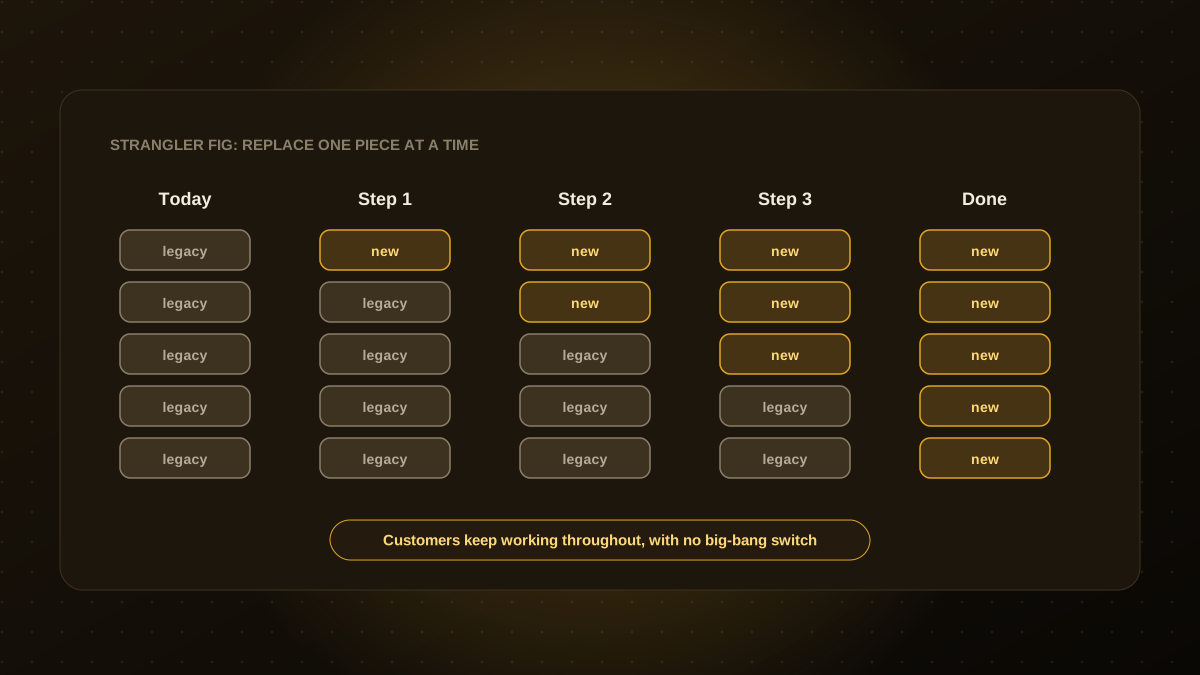
Legacy System Modernization: The Strangler Fig Approach, Step by Step
Rewriting an old system in one go is risky. The strangler fig approach replaces it piece by piece while the business keeps running. Here is how it works and how to start.