Key takeaways
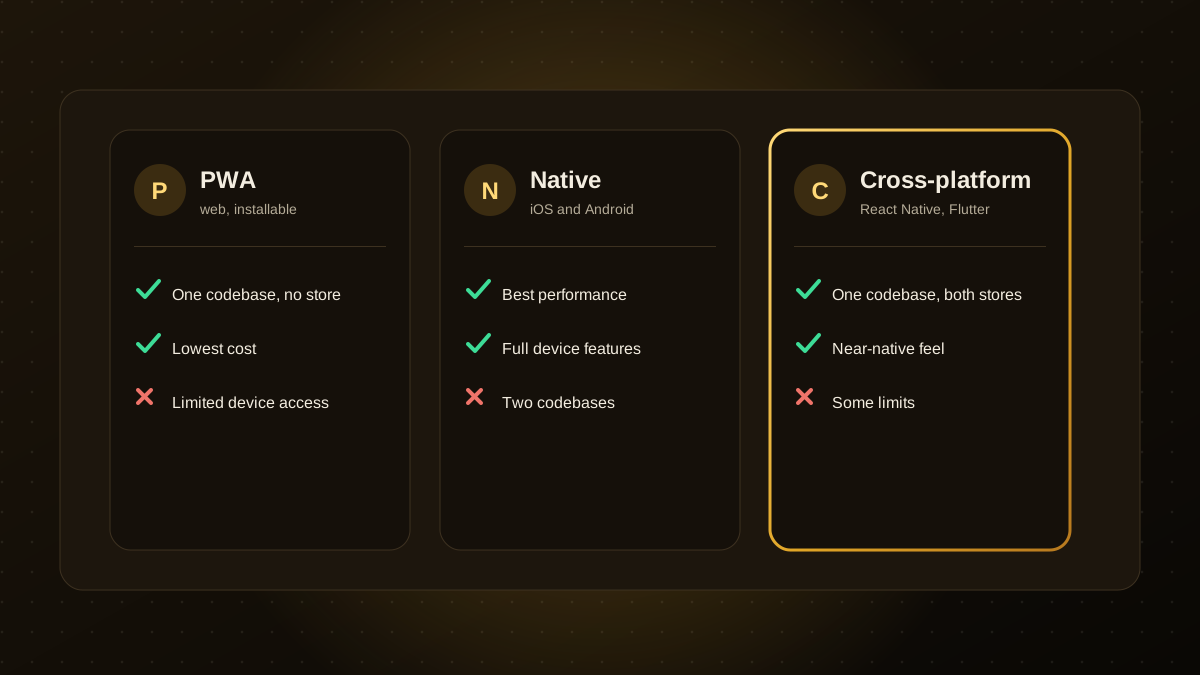
- A progressive web app (PWA) is a website that can be installed and work offline. It is the cheapest and fastest route, with the least device access.
- Native apps for iOS and Android give the best performance and full access to device features at the highest cost.
- Cross-platform frameworks such as React Native and Flutter share one codebase across both stores and suit most business apps.
- Choose based on the features you need, your budget and where your users are, not on fashion.
- Validate demand with the lightest option first, then invest when usage justifies it.
Four ways to build a mobile app
- Responsive website. Works in any browser, no install.
- Progressive web app. A website with an install prompt, offline support and some device features.
- Native. Separate apps written in each platform's own tools, such as Swift for iOS and Kotlin for Android.
- Cross-platform. One codebase compiled to both platforms with frameworks such as React Native or Flutter.
How they compare
| PWA | Cross-platform | Native | |
|---|---|---|---|
| Codebases | One (web) | One | Two |
| App store presence | Limited | Yes | Yes |
| Performance | Good for most content and forms | Near-native | Best |
| Device features | Growing but limited, varies by platform | Wide, plus native modules | Full and first access to new features |
| Relative cost | Lowest | Medium | Highest |
| Best for | Content, forms, dashboards, early validation | Most business and consumer apps | Graphics-heavy, hardware-heavy or platform-specific apps |
Questions that decide it
- Do you need deep device features, such as background location, Bluetooth, advanced camera use or push notifications on every platform?
- Do you need to be in the app stores for discovery or customer trust?
- How demanding is the interface? Complex animations and games lean native.
- What are your budget and timeline? One codebase halves the build and maintenance load.
- Which skills does your team have? Web developers can be productive in React Native quickly.
A staged approach
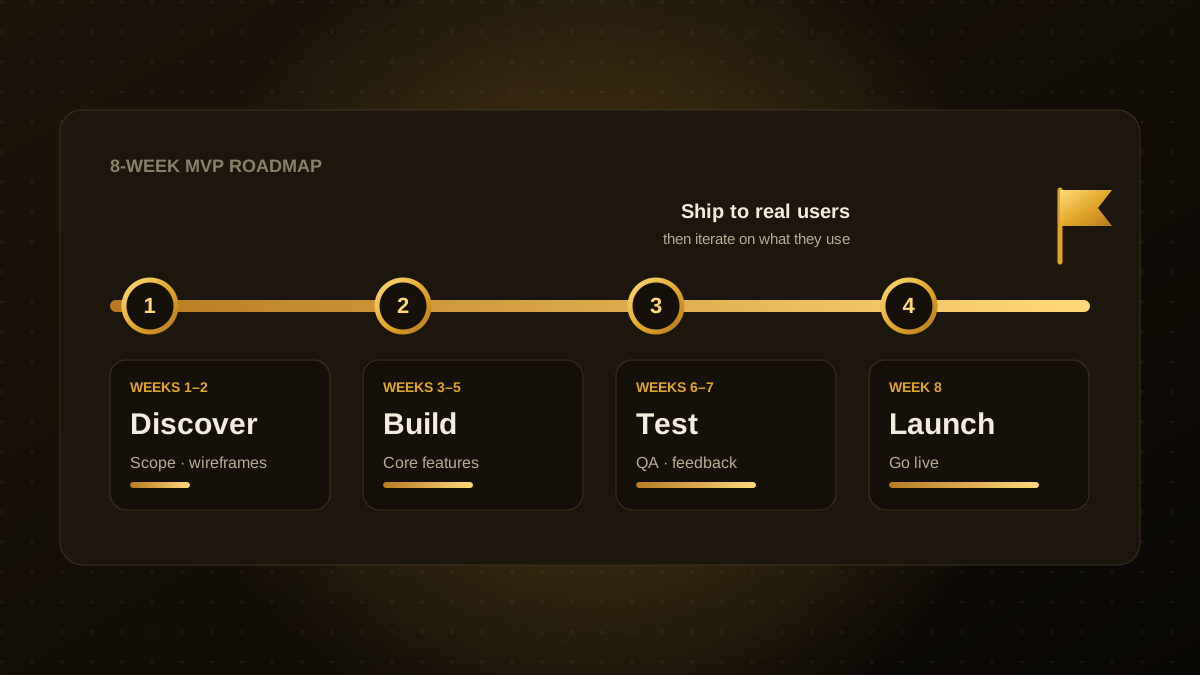
For a new product, start with the lightest option that tests your core idea, often a responsive web app or PWA. If people use it, move to a cross-platform app to get store presence and better device access. Reserve fully native builds for needs that cross-platform tools cannot meet. This follows the same logic as our 8-week MVP plan: learn first, then invest.
Do not forget the running costs
- Developer accounts and store fees, and review processes for each release.
- Ongoing updates for new operating system versions.
- Backend services, push notifications and analytics.
- Support and testing across many devices.
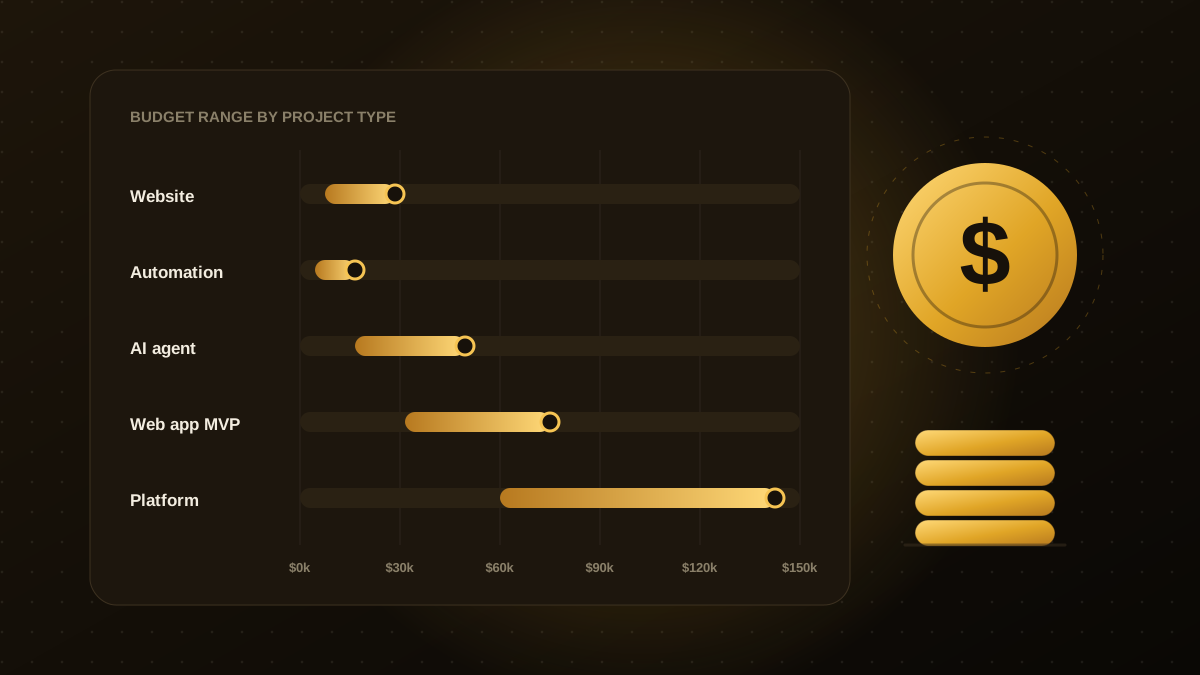
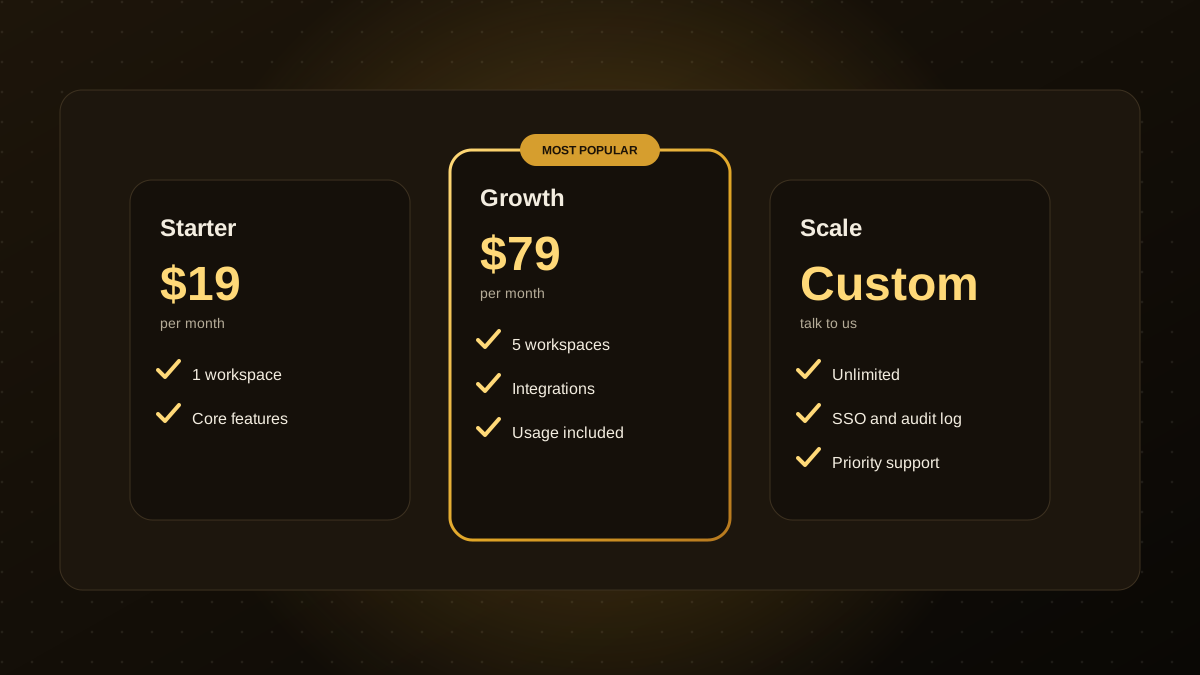
Our cost guide covers typical budgets, and our SaaS pricing guide helps you plan how the app will earn money. For help choosing and building, talk to our web app development team.
Written by the Qodexify engineering team
Qodexify is a remote-first team of senior engineers building web apps, AI agents, workflow automation and websites. Learn more about our web app development service or talk to an engineer.